
15 Concrete Patio Ideas with Low Maintenance

There’s a certain dream that draws homeowners outdoors: a beautiful patio where morning coffee tastes better, evening gatherings linger longer, and weekends feel like mini-vacations. But for many, that dream comes with a nagging asterisk—the hours of maintenance that traditional outdoor materials demand. Wood decks need annual staining. Natural stone shifts and sprouts weeds. Pavers sink and separate.
Enter concrete: the unsung hero of outdoor living. Today’s concrete patios bear little resemblance to the plain gray slabs of decades past. Modern techniques allow concrete to mimic flagstone, wood planks, slate, and cobblestone while delivering something those materials cannot—decades of beauty with minimal effort. According to the National Association of Realtors, homeowners recover approximately 95% of their patio investment at resale, and concrete’s longevity (25-30 years with basic care) makes that return even more attractive.
The secret lies in concrete’s remarkable versatility. Stamping techniques create textures indistinguishable from premium materials. Integral coloring ensures hues that never fade or chip. Proper sealing—the primary maintenance task—takes just a few hours every couple of years. Compare that to the weekly sweeping, annual staining, and constant repairs other materials demand, and the choice becomes clear.
Whether you’re building from scratch or reimagining an existing slab, these 15 concrete patio ideas prove that low maintenance and high style aren’t mutually exclusive.
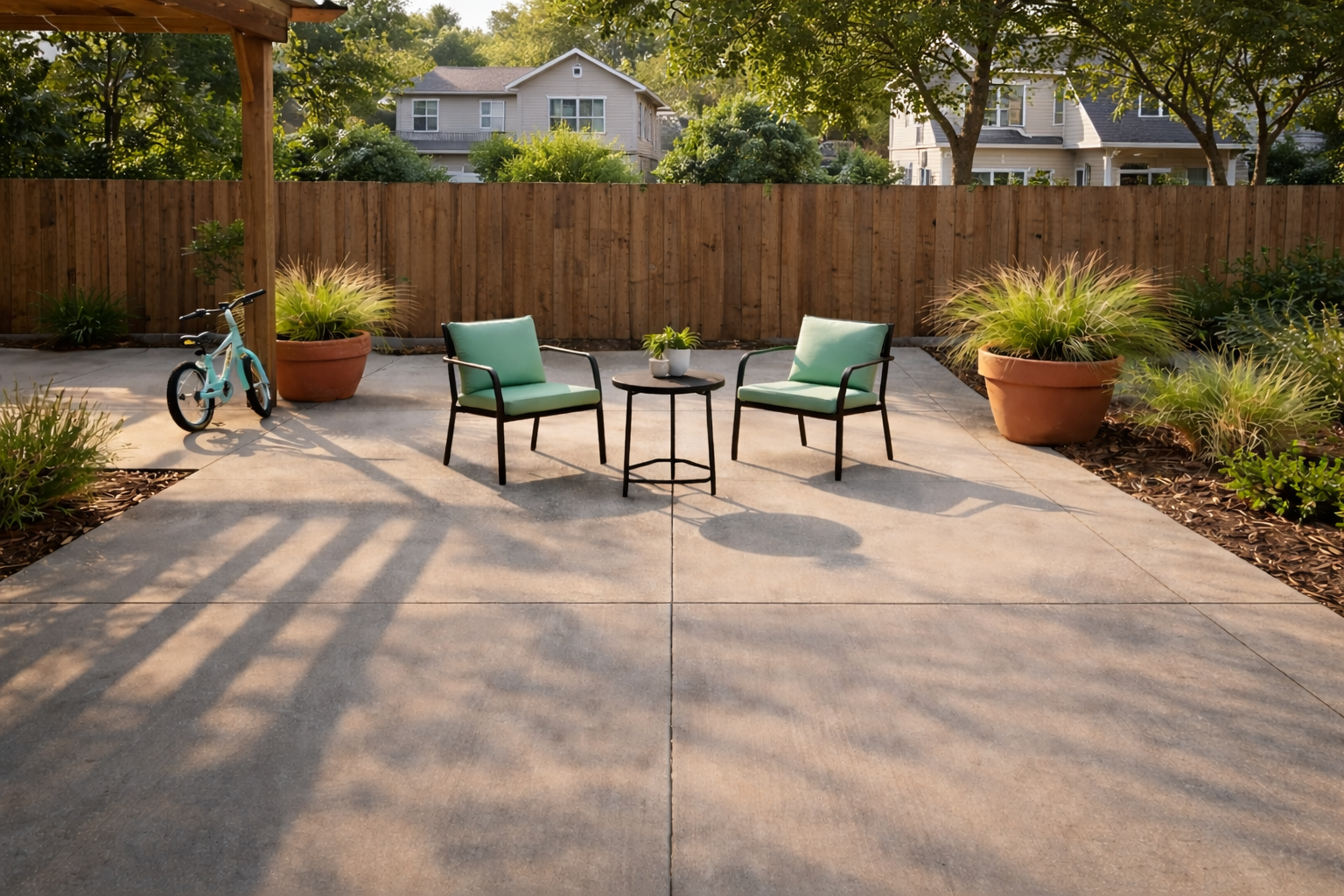
1. Classic Broom-Finished Patio
Sometimes the simplest solution is the smartest. Broom finishing—dragging a stiff-bristled broom across wet concrete to create subtle linear texture—has been a contractor favorite for generations, and for good reason. The technique creates a slip-resistant surface that’s gentle enough for bare feet yet practical enough for poolside use.
At $3-8 per square foot, broom-finished concrete is among the most budget-friendly options. Maintenance couldn’t be easier: sweep regularly, hose down occasionally, and reseal every two to four years. The finish can last 20-30 years, making it ideal for families who want durability without fuss.
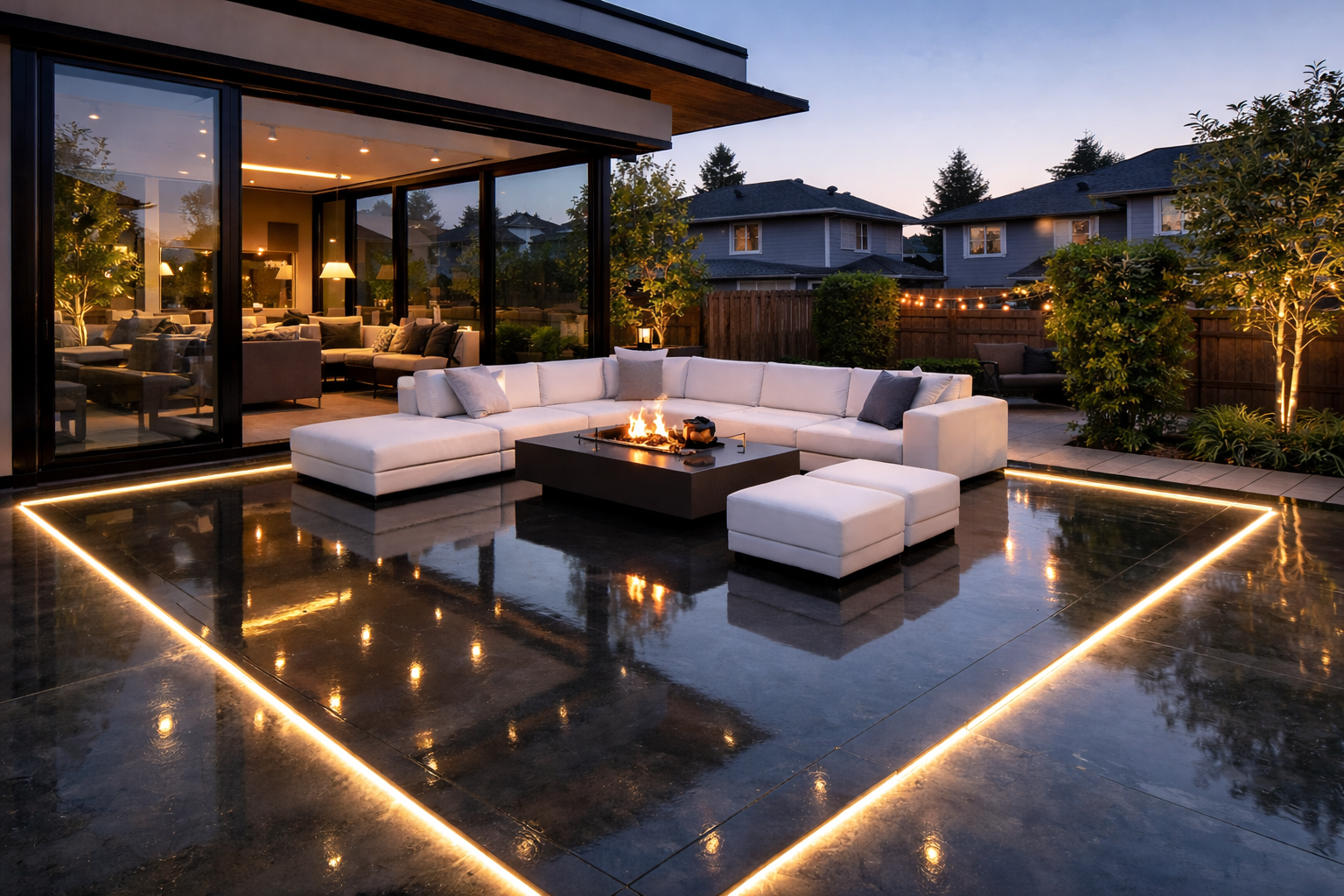
2. Polished Concrete Patio
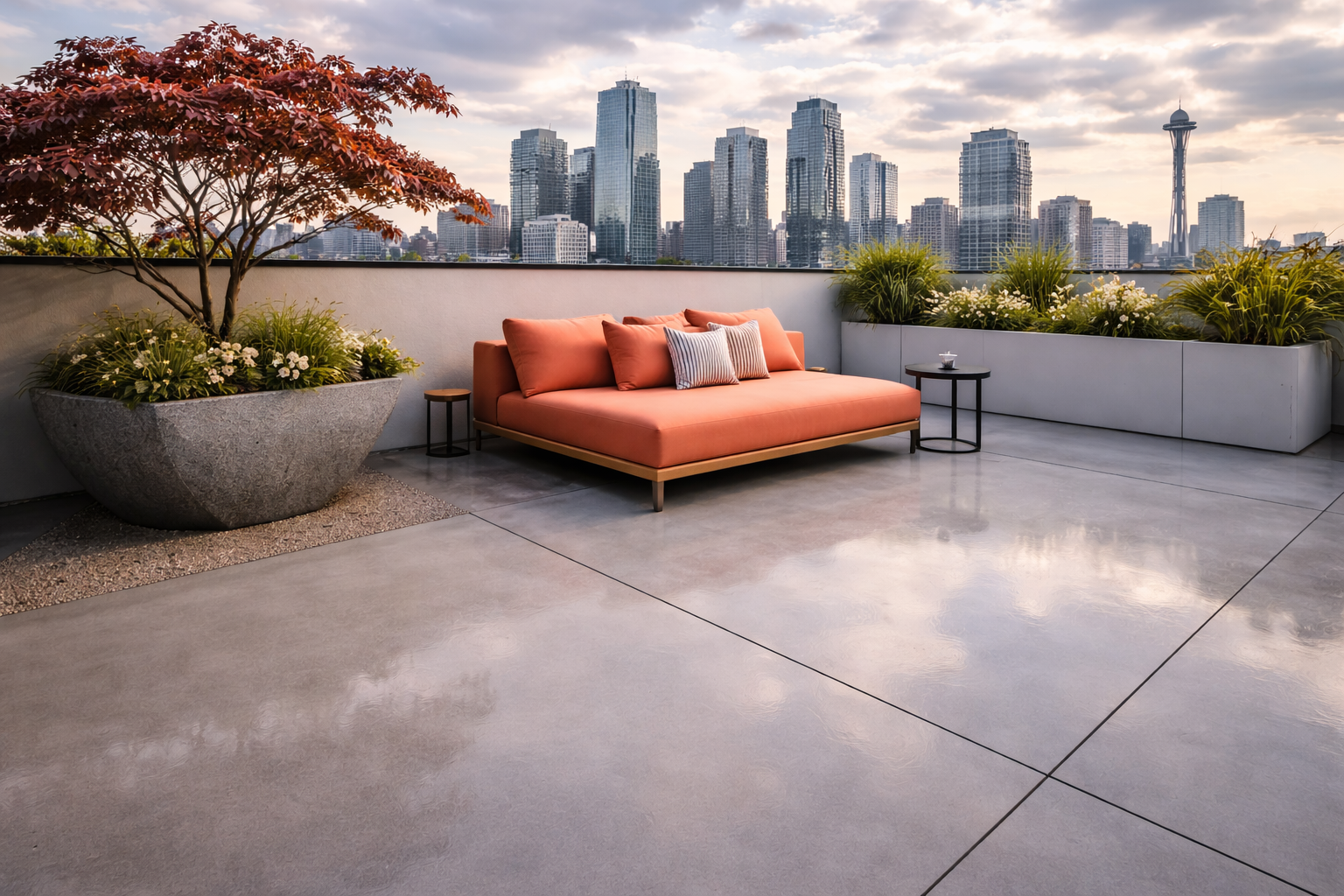
For homeowners drawn to contemporary design, polished concrete delivers sophisticated impact. This high-gloss finish mirrors the elegance of indoor flooring while maintaining outdoor durability. The reflective surface amplifies natural light, making spaces feel larger and more open.
The maintenance appeal is undeniable: polished concrete is essentially a sealed, smooth surface with nowhere for dirt to hide. A simple sweep and occasional mop keep it pristine. There are no grout lines to trap dirt or grow mold, and when properly sealed, the surface resists staining beautifully.
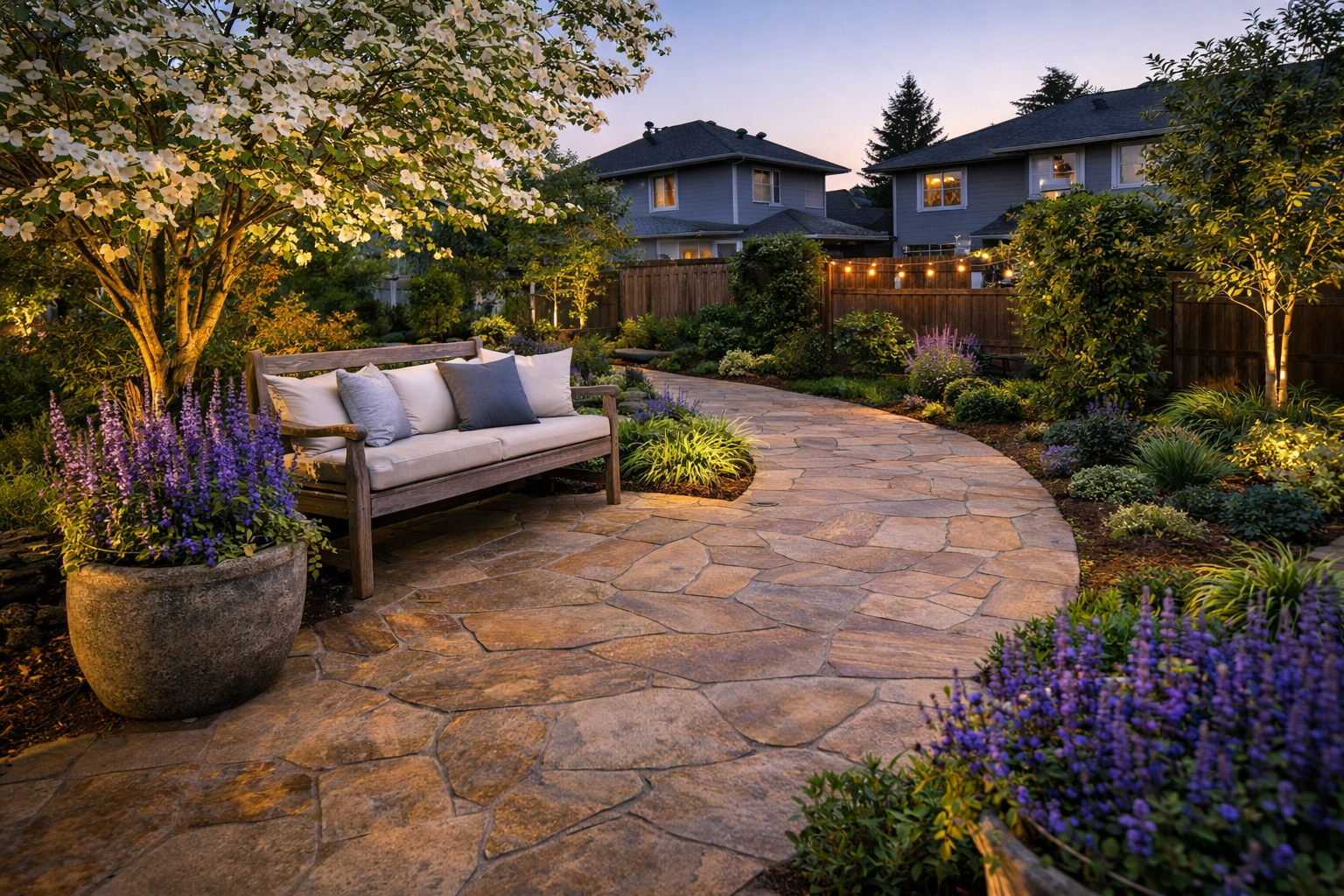
3. Stamped Flagstone Pattern
Natural flagstone patios are undeniably gorgeous—and notoriously high-maintenance. Stones shift, weeds colonize joints, and uneven surfaces become tripping hazards. Stamped concrete solves these problems by imprinting flagstone’s irregular shapes and organic texture into a continuous, stable surface.
The result costs approximately half of real flagstone installation while eliminating its headaches. There are no loose stones to reset, no gaps for weeds to exploit, and no individual pieces to replace. Periodic sealing maintains the color vibrancy of earth tones that blend seamlessly with garden settings.
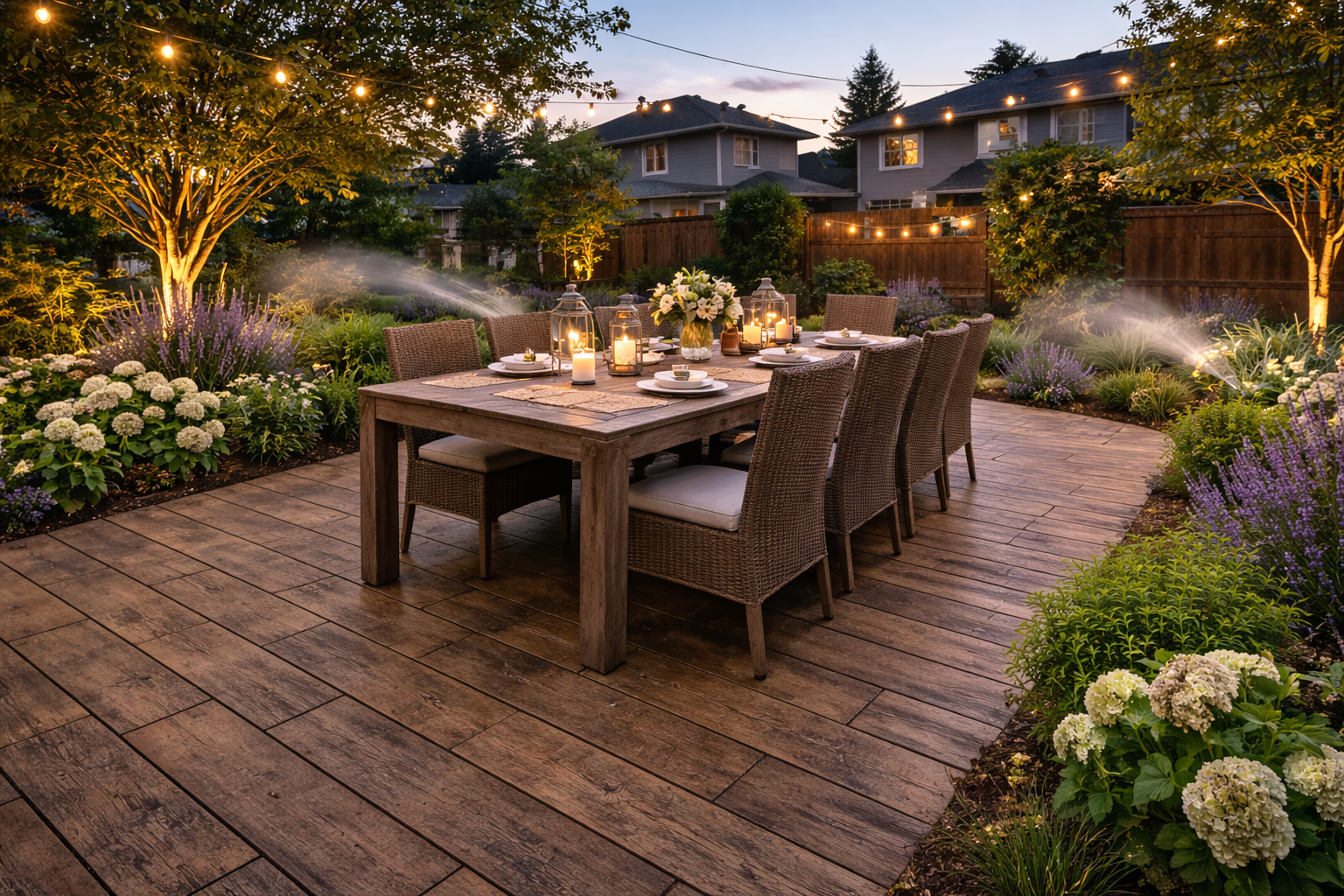
4. Wood Plank Stamped Concrete
Wood decks hold nostalgic appeal, but their maintenance demands are legendary: annual staining, board replacement, splinter repairs, and the constant battle against rot and termites. Stamped concrete captures wood’s warmth and character—realistic grain patterns, authentic-looking knots, even the appearance of weathered cedar or reclaimed barn wood—without any of the upkeep.
Your “wood” patio will never rot, warp, attract pests, or require sanding. Occasional power washing is all it takes to maintain the illusion of a pristine deck, year after year.
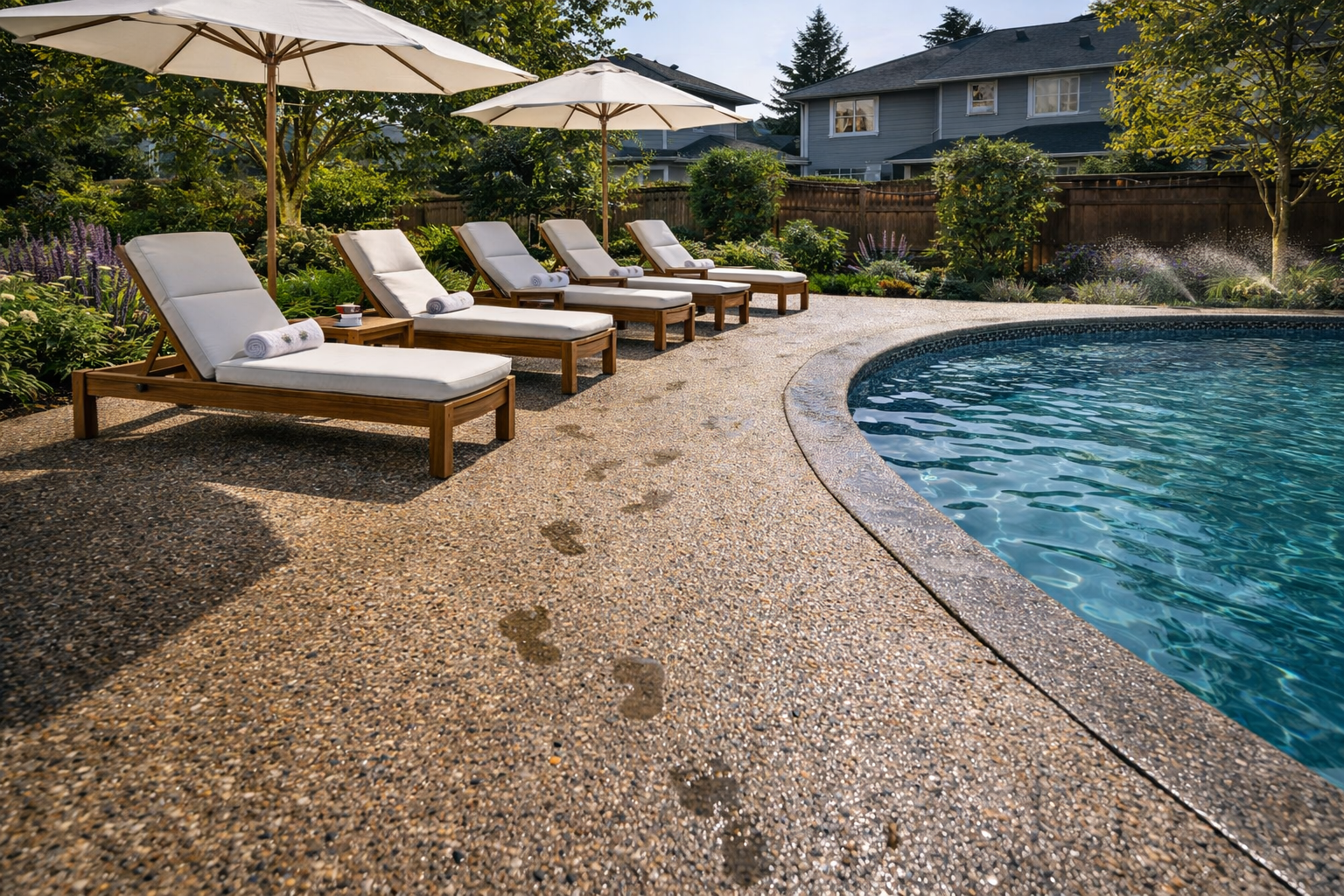
5. Exposed Aggregate Finish
This technique reveals the natural beauty of stones, pebbles, or decorative glass embedded within the concrete mix. The result is a unique textured surface with excellent traction—perfect for pool decks and areas prone to moisture.
Exposed aggregate naturally hides minor imperfections and stains, making it forgiving in high-traffic areas. The textured surface provides slip resistance without additional treatments, and the durable finish withstands years of heavy use. Choose aggregates that complement your landscape, from beach pebbles to river rock.
6. Integrally Colored Concrete
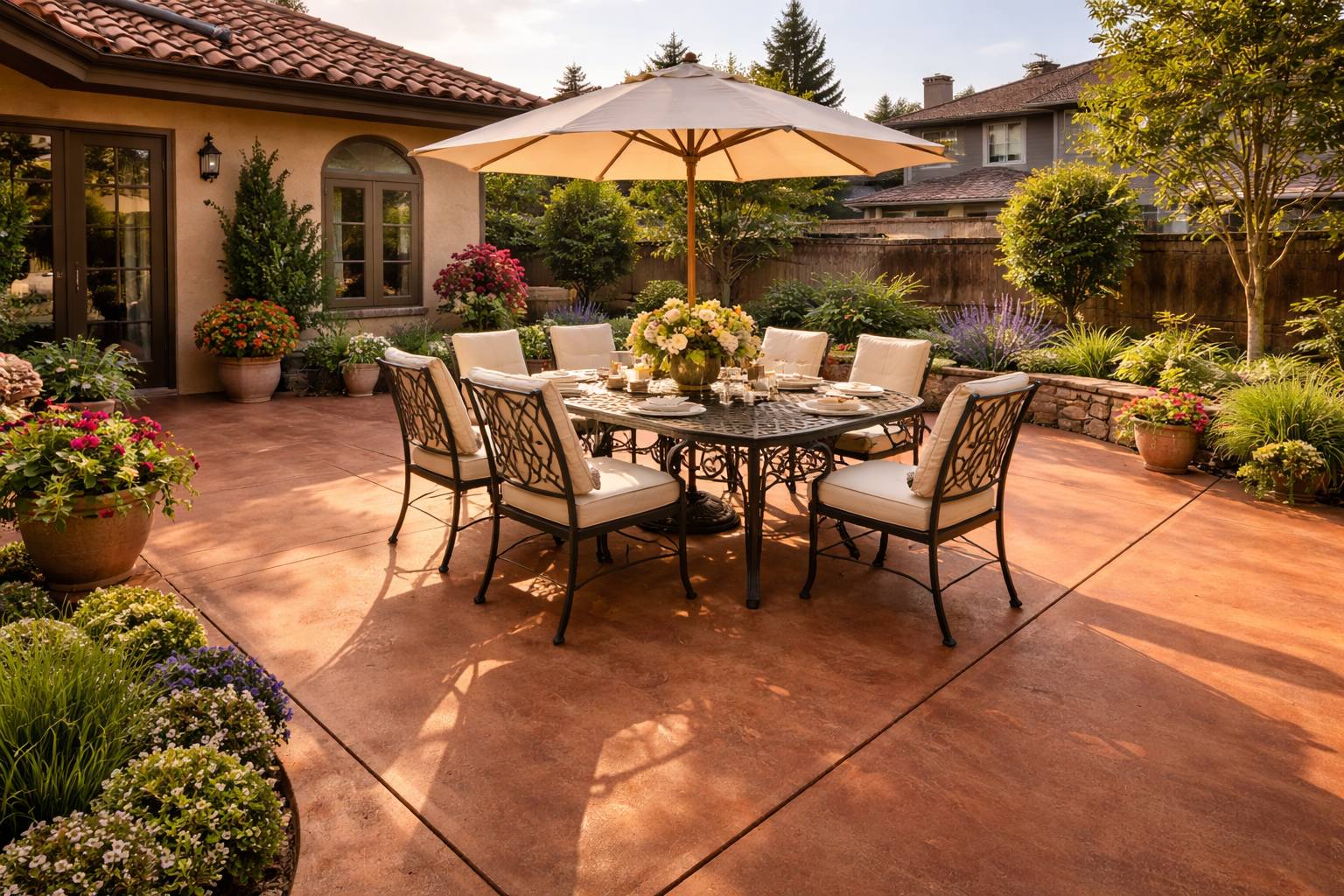
Surface-applied stains and dyes can fade, chip, or wear unevenly over time. Integrally colored concrete eliminates these concerns by mixing pigment throughout the entire slab before pouring. The color extends through the full depth, so surface abrasion never reveals a different shade beneath.
This approach offers superior UV resistance and long-term color consistency. From earthy terracotta to sophisticated charcoal, the range of available hues allows perfect coordination with your home’s exterior. No touch-ups, no color matching, no fading worries.
7. Geometric Paver-Style Concrete
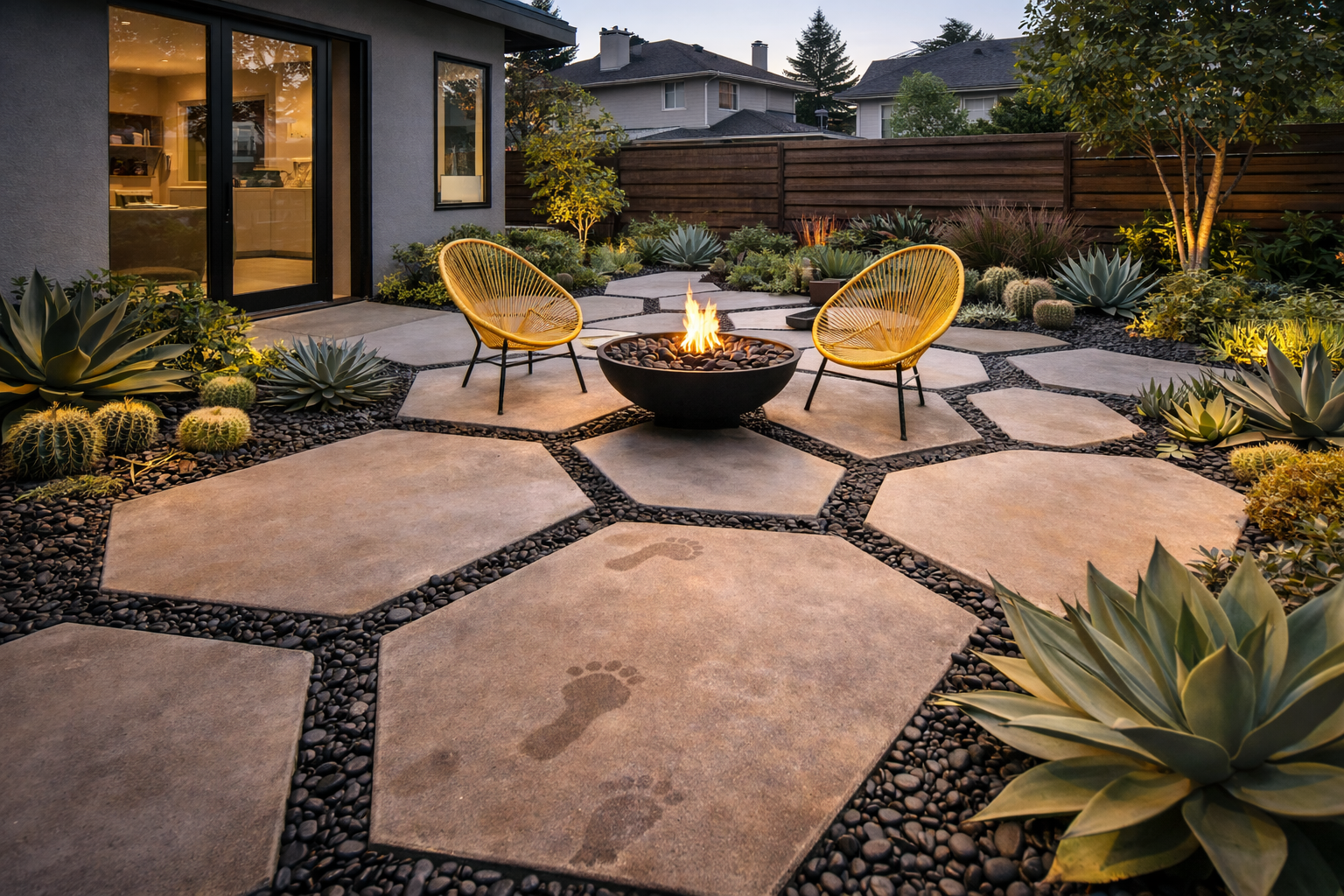
Modern design embraces bold geometry, and concrete delivers beautifully. Large-format hexagons, oversized squares, or custom shapes can be poured or cut into concrete, creating clean lines and contemporary aesthetic. Setting these geometric sections within decorative gravel adds visual interest and natural drainage.
Large format means fewer joints to maintain, and individual sections can be replaced if damaged without disturbing the entire patio. For eco-conscious homeowners, permeable installation options allow rainwater to filter naturally into the ground.
8. Stained Concrete Patio
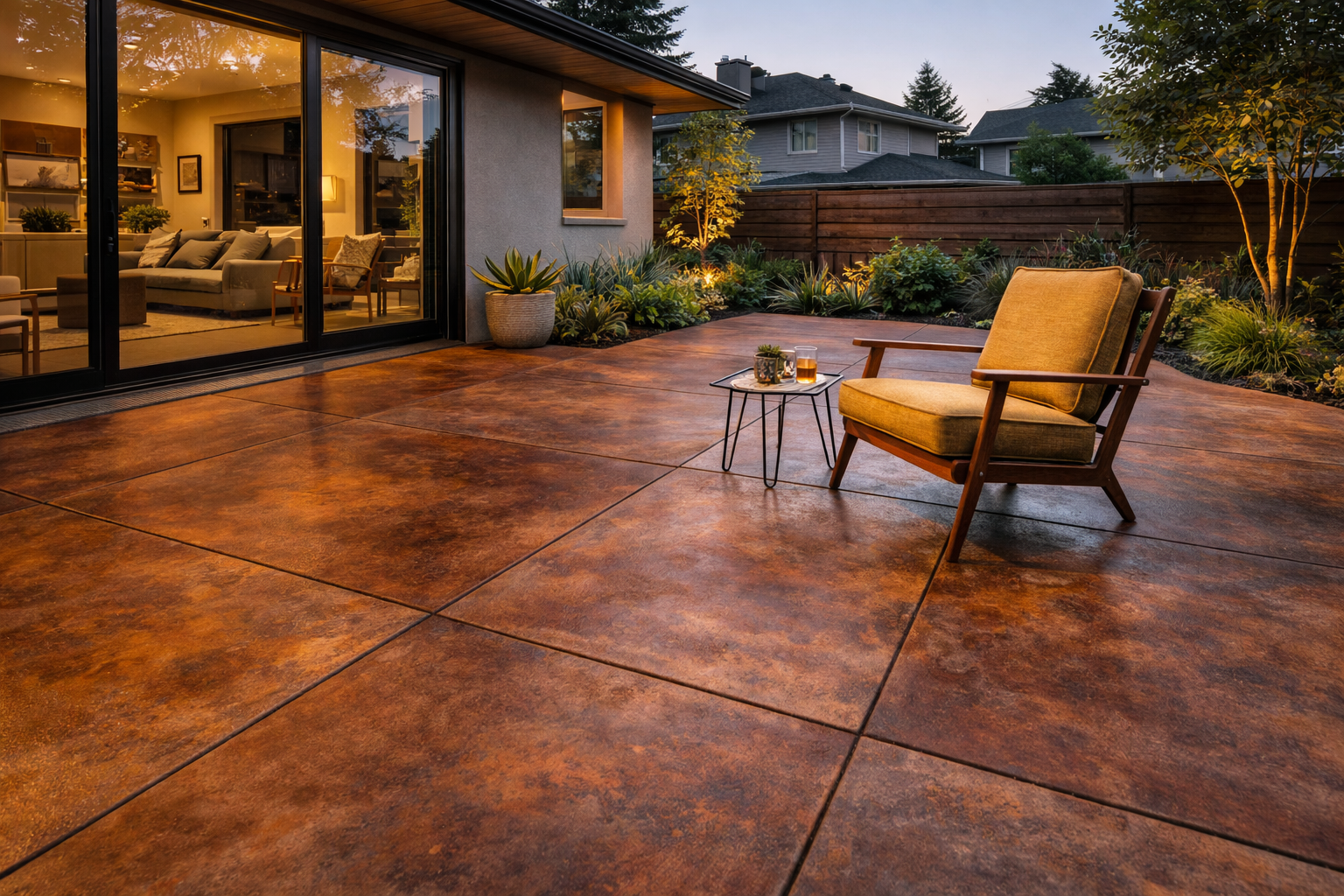
Existing concrete doesn’t need to be demolished to be transformed. Acid or water-based stains penetrate the surface, creating rich, translucent color with marbled, variegated effects impossible to achieve with paint. This makes staining ideal for patio renovations seeking high-end looks on modest budgets.
Because stain penetrates deeply rather than sitting on top, it won’t peel or flake. Sealed stained concrete resists moisture and UV damage, maintaining its artistic character for years. The technique works on both new and existing concrete, offering flexibility for any project.
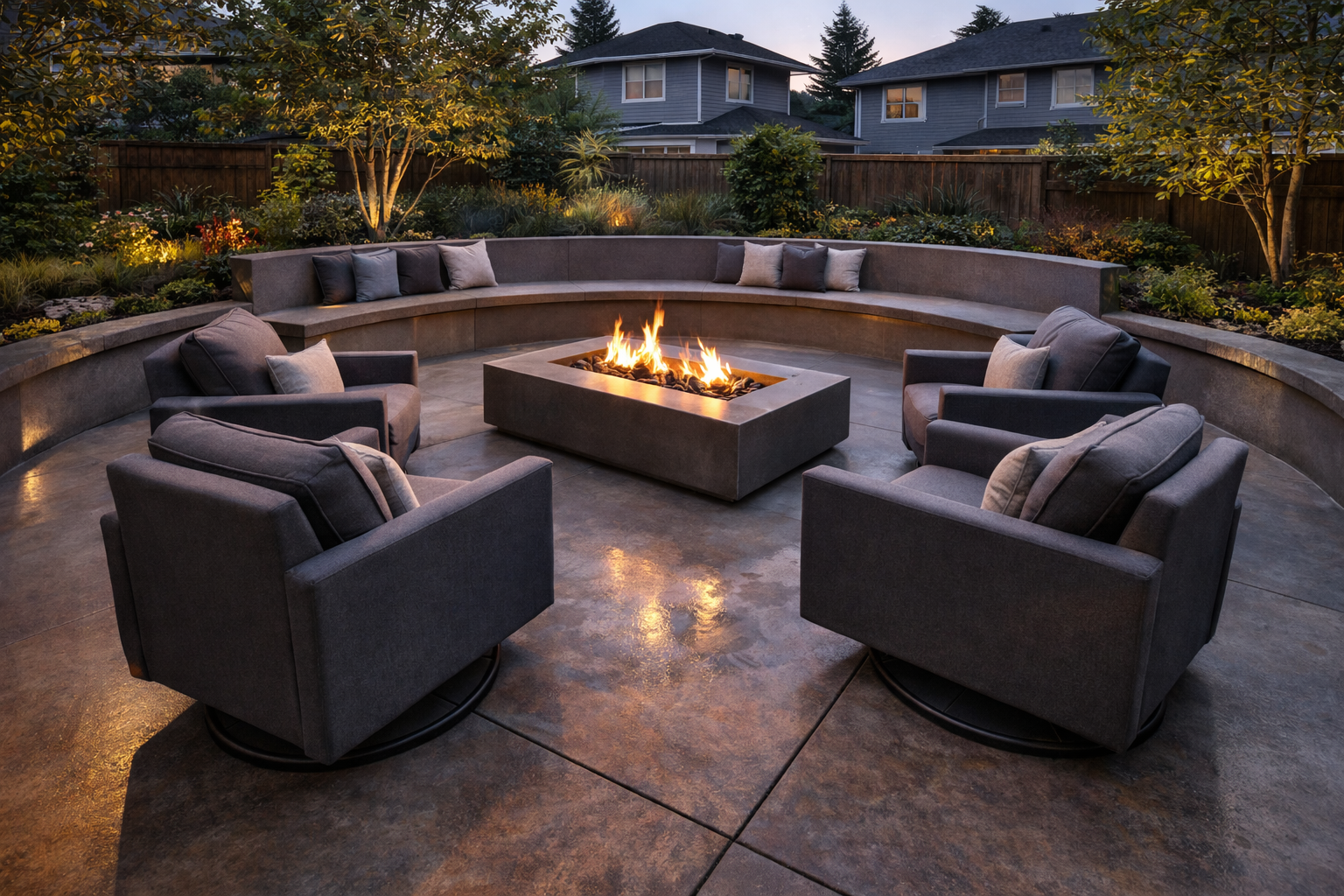
9. Concrete Patio with Built-In Fire Pit
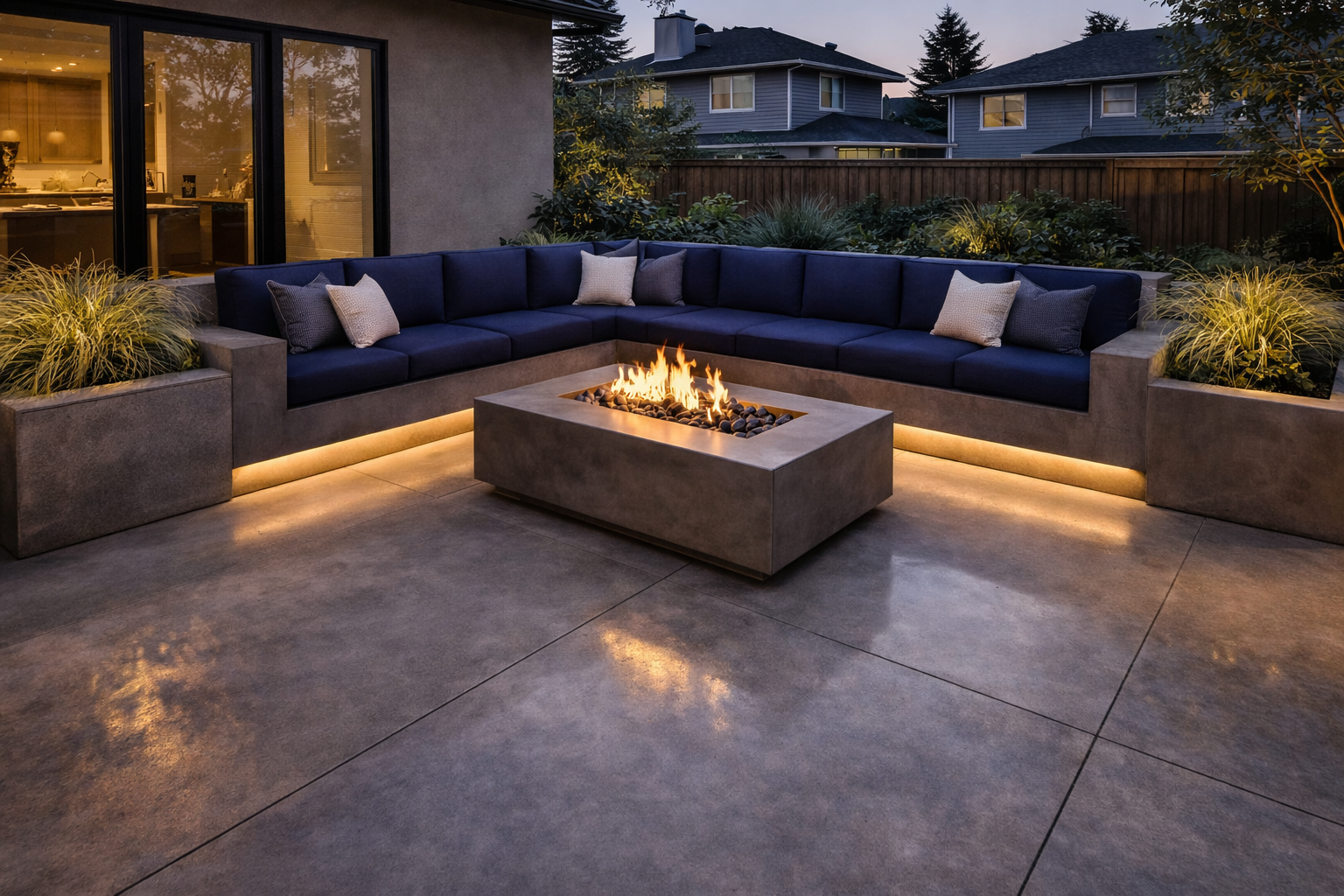
Fire features transform patios from functional spaces into gathering destinations. Integrating a fire pit directly into poured concrete creates seamless design while eliminating separate components that can rust, deteriorate, or require storage.
Gas-powered fire pits offer the ultimate low-maintenance experience: no ash cleanup, no wood storage, no smoke complaints from neighbors. The concrete surround requires only occasional cleaning, and the entire feature becomes a permanent, worry-free focal point for four-season outdoor living.
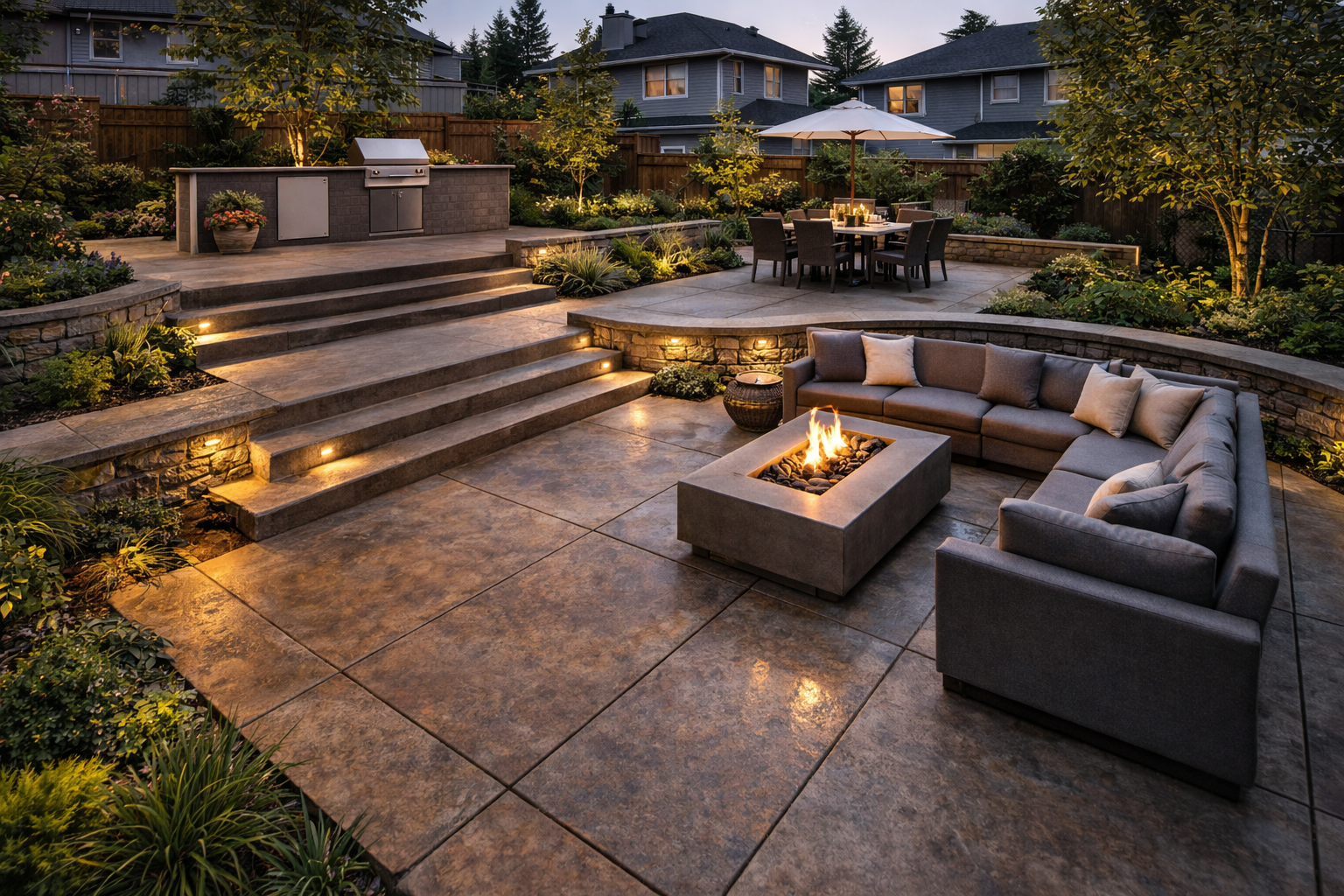
10. Multi-Level Concrete Patio
Sloped yards present challenges that multi-level patios transform into opportunities. Tiered designs create distinct zones for different activities—cooking, dining, lounging—using level changes rather than walls to define spaces. The result feels like multiple outdoor rooms flowing naturally together.
Using a single material throughout simplifies cleaning dramatically. There are no transitions between different surfaces to trap debris, and level changes aid natural water drainage away from the home. Built-in steps or gentle ramps connect levels seamlessly.
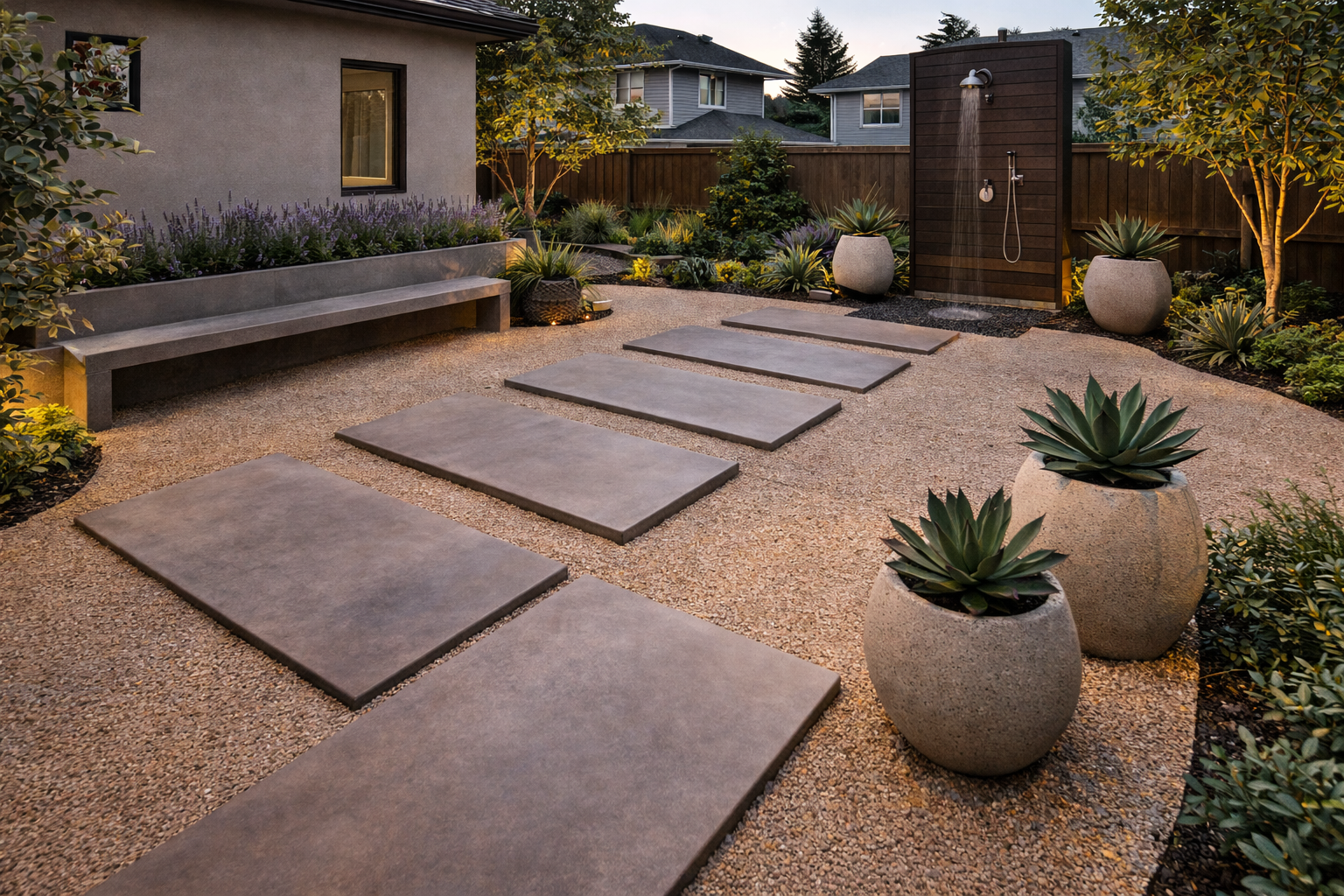
11. Concrete and Gravel Combination
This design approach creates visual interest through material contrast while providing natural drainage. Large concrete pavers or defined sections are set within decorative gravel—decomposed granite, pea gravel, or river rock—creating a permeable, low-maintenance surface.
Gravel suppresses weeds effectively when installed over landscape fabric, while concrete sections require only occasional sweeping. The combination suits drought-tolerant landscapes beautifully and can be refreshed periodically by simply raking or adding gravel.
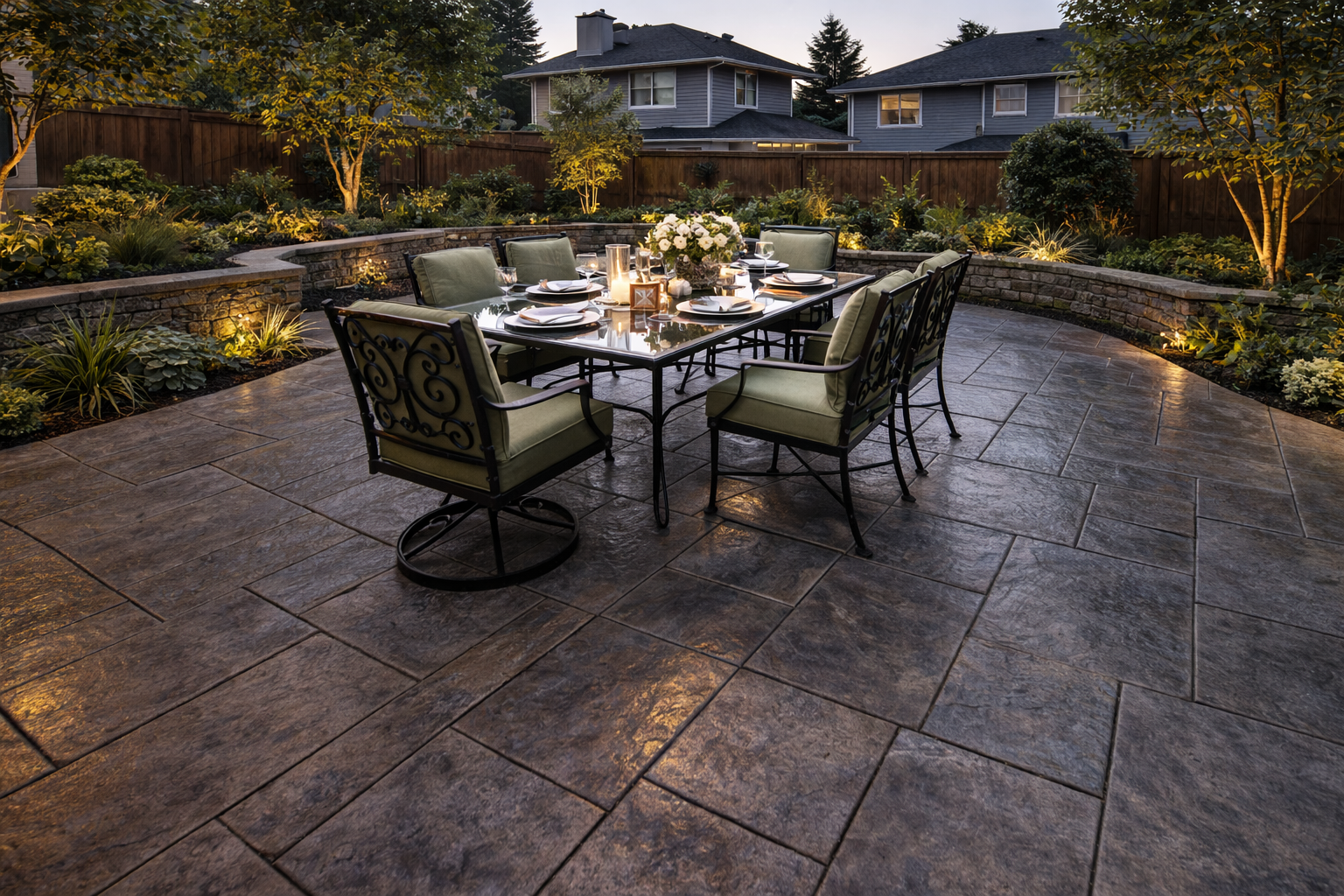
12. Ashlar Slate Stamped Pattern
For homeowners seeking sophistication, the Ashlar slate pattern offers geometric precision with natural stone appearance. This popular stamping technique creates random rectangular shapes that mimic cut slate, suitable for both traditional and contemporary homes.
The continuous surface eliminates loose stone maintenance entirely while the pattern naturally hides minor surface imperfections that develop over time. Regular sealing maintains the slate-like sheen, and the elegant result suits formal entertaining beautifully.
13. Minimalist Smooth-Finish Patio
Sometimes less truly is more. A clean, unadorned concrete surface with troweled smooth finish emphasizes simplicity and creates a versatile backdrop for any décor style. This approach pairs beautifully with modern architecture and allows bold furniture choices to take center stage.
Flat surfaces are the easiest to sweep and maintain—there are no texture grooves to trap dirt or debris. Resealing is straightforward without pattern matching concerns, and the neutral canvas adapts effortlessly as your style evolves over the years.
14. Cobblestone Stamped Concrete
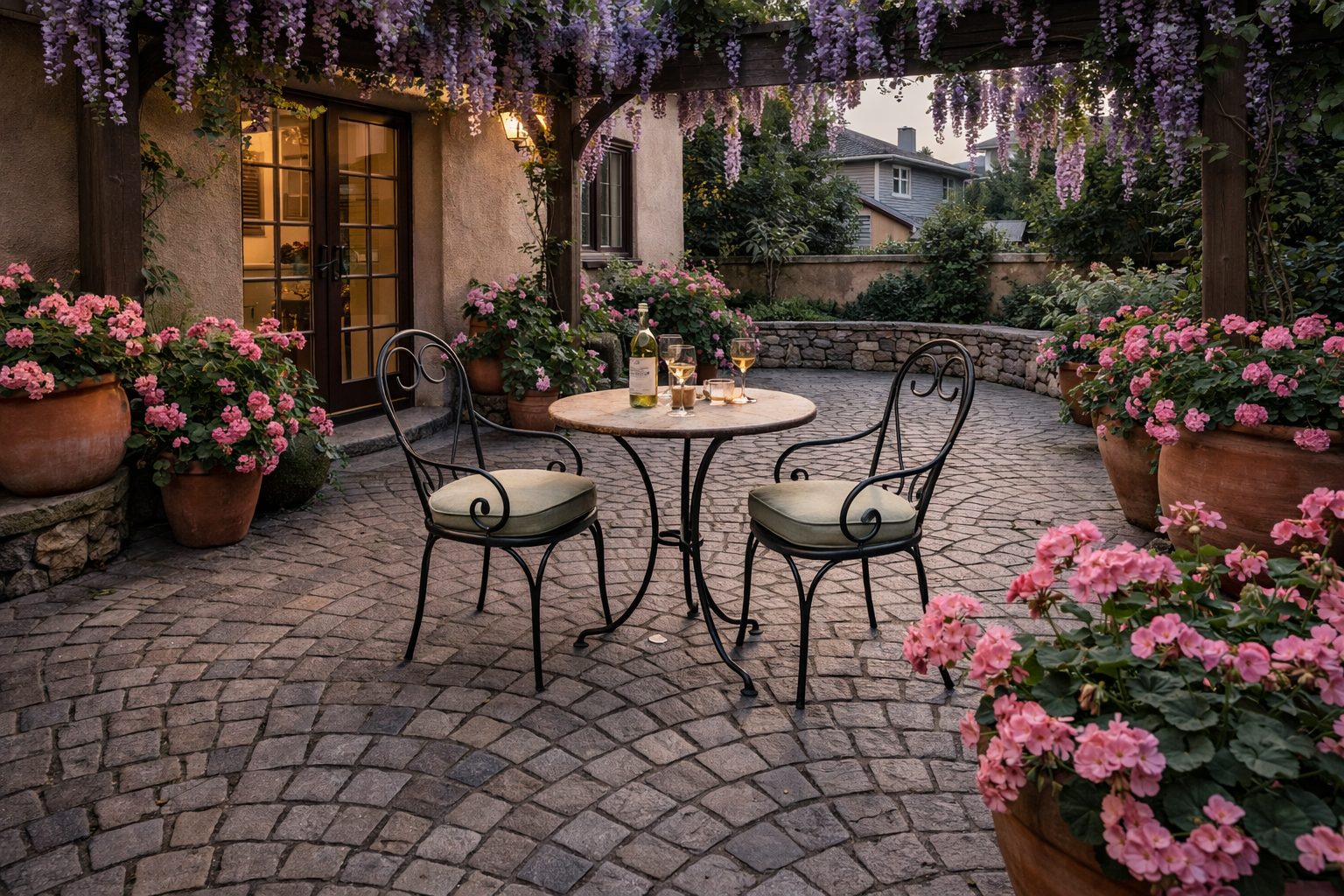
European village squares and historic streetscapes inspire this charming pattern. Stamped concrete recreates antique cobblestone aesthetics—available in fan patterns, running bond, or random layouts—adding Old World character without installation complexity or maintenance headaches.
Unlike actual cobblestones, stamped versions won’t shift, sink, or become tripping hazards. The unified surface prevents weed growth between “stones” and cleans far more easily than authentic cobble, which traps dirt in countless crevices.
15. Concrete Patio with Integrated Seating
Built-in concrete benches, walls, and platforms eliminate the need for separate outdoor furniture entirely. These permanent, weather-proof seating elements never need to be moved for mowing, covered for storms, or replaced due to wear.
The concrete base simply needs occasional cleaning while removable cushions can be stored inside during inclement weather. This approach maximizes seating capacity without furniture clutter and creates architectural interest that becomes part of the landscape itself.
Making Your Low-Maintenance Dream a Reality
The common thread connecting all fifteen ideas is this: proper installation and periodic sealing are the primary investments your concrete patio requires.
Basic Maintenance Requirements
Most concrete patios need surprisingly little attention:
- Resealing: Every 2-4 years (a weekend afternoon project)
- Sweeping: Regular debris removal
- Hosing: Occasional rinse-down
- Crack repair: Address promptly before spreading
That’s it. Decades of enjoyment for a few hours of care annually.How to Choose the Right Design
When selecting your finish, consider these factors:
| Design Type | Best For | Maintenance Level |
|---|---|---|
| Stamped patterns | Dramatic transformation | Moderate (texture grooves need cleaning) |
| Smooth finishes | Ultimate simplicity | Easiest to clean |
| Built-in features | Reducing furniture upkeep | Low (no separate pieces to maintain) |
| Permeable/gravel combos | Drainage concerns | Low (occasional gravel refresh) |
Ask yourself:
- What’s my home’s architectural style?
- How does my landscape look and feel?
- How much time am I honestly willing to spend on maintenance?
Climate Considerations
Your location should influence your concrete choices:
- Freeze-thaw regions: Ensure proper air entrainment in the concrete mix to prevent surface spalling
- Sunny climates: Use UV-resistant sealers to protect colored concrete from fading
- Desert areas: Prioritize permeable designs that handle flash flooding
- Coastal locations: Consider exposed aggregate for superior traction on salt-spray surfaces
Budget Planning Tips
Account for both installation and long-term costs:
Upfront costs vary:
- Broom finish = most affordable
- Stamped concrete = higher initial investment
- All concrete options = significantly less lifetime cost than wood or natural stone
What to include in contractor quotes:
- Proper base preparation
- Appropriate concrete thickness (4″ minimum)
- Quality sealing application
Cutting corners on these fundamentals undermines even the most beautiful finish.
Hiring the Right Contractor
Follow these steps to find quality workmanship:
- Request in-person examples — Photos don’t tell the whole story
- Ask for aged references — Projects from 3-5 years ago show how their work holds up
- Confirm expertise — Ensure they understand your specific finish and can explain their process
- Get itemized quotes — Compare apples to apples across contractors
The Bottom Line
The transformation a well-designed concrete patio brings extends beyond aesthetics. It changes how you live—drawing you outdoors more often, encouraging gatherings that might otherwise not happen, and creating memories in a space that asks almost nothing of you in return.
Because ultimately, the best patio isn’t the most elaborate or expensive—it’s the one you’ll actually use.
And low maintenance makes that possible, weekend after weekend, season after season, year after year. Your outdoor retreat awaits, and it’s easier to maintain than you ever imagined.
Want a cleaner patio without the guesswork?
Share your zip code and what you need. We’ll route your request to a qualified concrete patio cleaning pro near you.