
Concrete Patio Cleaning: Pressure Washing vs Soft Washing
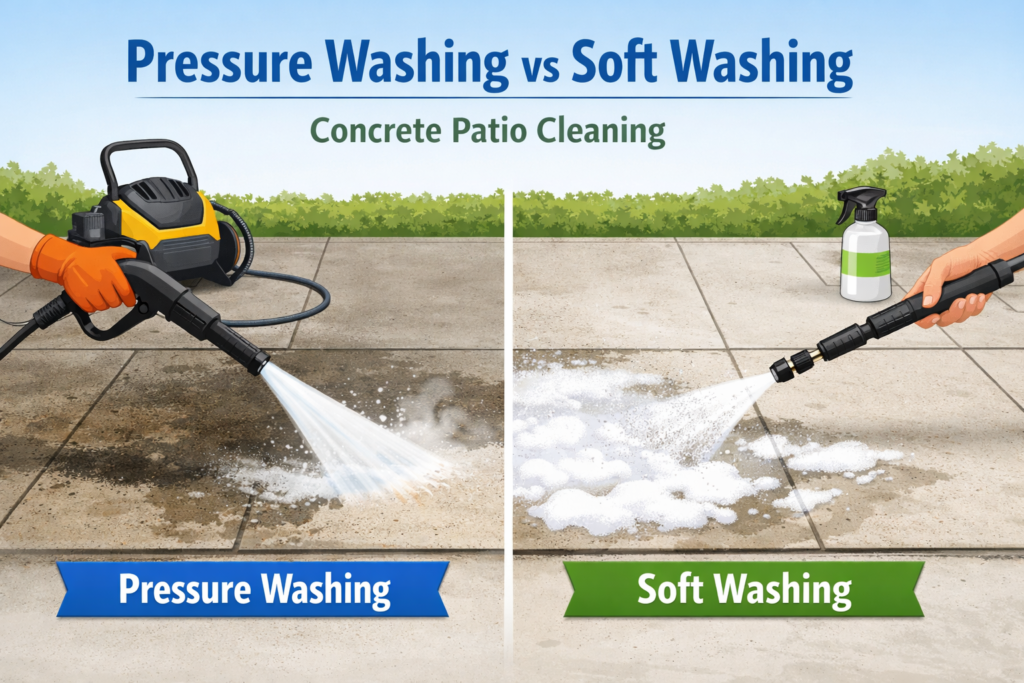
Choose the Right Wash Method and Get a Cleaner Patio That Lasts
If your concrete patio looks dull, blotchy, green in shaded areas, or slick after rain, you’re not alone. The big question is how to clean it without damaging the surface or watching stains return a week later. Pressure washing and soft washing can both work, but they solve different problems in different ways. This guide breaks down the real differences so you can choose the method that fits your patio, your stains, and your climate.
Concrete is tough, but it’s also porous. That matters because most patio “dirt” isn’t just sitting on top. Fine dust, organic growth, pollen, grease, tannins from leaves, and mineral deposits can settle into pores, creating discoloration that a quick rinse won’t touch. The right method is the one that removes what’s embedded in the surface while keeping the concrete intact and safe to walk on.
When patios usually look “dirty”
- Green algae film in shade or low spots
- Black mildew speckling after humid weather
- Dark traffic lanes and grime streaks
- Rust stains from furniture, planters, and railings
- Oil and grease stains near grills
- White mineral deposits from sprinklers or hard water
- Leaf stains and tannin discoloration in fall or rainy climates
What a “proper clean” should do
- Lift embedded dirt from concrete pores
- Remove or neutralize algae and mildew
- Improve traction and reduce slick areas
- Even out the look without striping
- Protect the surface from unnecessary wear
- Help the patio stay cleaner longer
Pressure Washing vs Soft Washing: What’s the Real Difference?
The simplest way to think about it is this: pressure washing relies more on force, while soft washing relies more on chemistry. Both use water. Both can include cleaners. But the balance between pressure, technique, and treatment is what changes the outcome.
Pressure washing uses higher water pressure to remove dirt and buildup. It can be very effective on compacted grime, heavy soil, and surface residue. It’s also the method most people picture when they think “power washing.” The risk is that too much pressure, the wrong nozzle, or poor technique can leave visible lines, roughen the surface, or damage weak areas of concrete.
Soft washing uses lower pressure paired with cleaning solutions that break down organic growth and stains. It’s especially effective for algae, mildew, and moss because it targets the organisms, not just the color on the surface. The advantage is gentler rinsing and less chance of etching or striping. The tradeoff is that it requires proper dwell time and thorough rinsing to remove residues.
Pressure Washing
- Higher pressure removes compacted grime faster
- Great for dirt, mud, and heavy surface buildup
- Can leave striping if technique isn’t consistent
- Too much pressure can roughen or damage worn concrete
- Often needs pre-treatment for algae and mildew
Soft Washing
- Low pressure with cleaner-based stain removal
- Excellent for algae, mildew, and moss
- Lower risk of etching or visible “wand lines”
- Works best with dwell time and full rinse
- Ideal for older, decorative, or stamped concrete
What’s Actually Staining Your Concrete Patio?
Choosing the right method starts with identifying the problem. Most patios have a mix of issues, but usually one or two are doing the most damage visually. Here are the most common categories:
- Organic growth: algae, mildew, and moss that thrive in moisture and shade
- Traffic grime: foot oils, dust, and dirt that embed in pores over time
- Grease and food: grill drips, cooking oil, and spills that darken and spread
- Mineral deposits: sprinkler overspray, hard water, and runoff that leave white staining
- Tannins and leaf stains: dark patches where leaves sit wet and break down
- Rust and metal marks: stains from planters, patio furniture, and fixtures
Organic growth is the biggest driver of “slick patio” complaints. The surface can look fine when dry, then feel like ice when it’s wet. That’s usually algae film, and it’s a safety problem as much as a cosmetic one. This is where soft washing often shines because it targets growth at the source.
When Pressure Washing Is the Better Choice
Pressure washing makes sense when the main issue is compacted dirt and heavy surface residue. Think muddy footprints, construction dust, grime packed into textured concrete, or thick buildup after months of neglect. It can also be helpful after winter in colder climates where residue accumulates from slush, tracked-in debris, and sand or grit.
That said, good pressure washing isn’t about blasting everything at maximum power. The best results come from controlled pressure, consistent distance, and even passes. Many professionals use surface cleaners for large flat areas because they reduce striping and deliver a more uniform finish.
Pressure washing is often a great finishing step after pre-treatment, especially for patios that have both organic growth and heavy dirt. The cleaner loosens the problem, and the rinse removes it evenly.
- Best for thick dirt, mud, and compacted grime
- Helpful for large patios when a surface cleaner is used
- Effective as a rinse step after pre-treatment
- Ideal for patios that don’t have delicate finishes or heavy wear
When Soft Washing Is the Better Choice
Soft washing is usually the best choice when organic growth is the main issue. Algae, mildew, and moss aren’t just surface stains. They’re living growth that can root into the pores. Pressure alone can remove the top layer, but it often leaves spores behind, which is why patios can turn green again quickly.
Soft washing focuses on treatment first. The solution breaks down growth, loosens staining, and helps lift grime without having to lean on high pressure. This is especially important for older concrete, decorative concrete, stamped patterns, and any patio with existing cracks or surface wear.
Soft washing also tends to produce a more even result because the cleaning is chemical-driven rather than force-driven. That means fewer “clean lines,” less streaking, and less surface roughening over time.
- Best for algae, mildew, moss, and slick green film
- Safer for older, cracked, or weathered concrete
- Often better for decorative or stamped surfaces
- Helps slow regrowth when done with proper dwell time
The “Hybrid” Method Most Patios Actually Need
In the real world, many patios have both organic growth and compacted grime. That’s why a hybrid approach is common: treat the surface first, then rinse with controlled pressure. This method gives you the best of both worlds. The treatment breaks down algae and mildew at the root level, and the rinse lifts everything out of the pores.
A good hybrid clean usually follows a simple logic:
- Step 1: Dry debris removal (blow off leaves, dirt, and loose material)
- Step 2: Apply targeted pre-treatment to organic growth and staining
- Step 3: Allow dwell time so the solution can do the heavy lifting
- Step 4: Rinse evenly at safe pressure to avoid striping or etching
- Step 5: Spot-treat stubborn stains like rust or grease if needed
This approach also tends to be more durable. When growth is neutralized first, patios often stay cleaner longer, especially in humid climates or shaded yards.
Common Mistakes That Make Patios Look Worse
Many “DIY pressure washing” problems come down to technique and expectations. Concrete can be damaged or left looking uneven if the process isn’t controlled. Here are a few issues that show up often:
- Striping: visible wand lines from uneven passes or inconsistent distance
- Etching: roughened surface from excessive pressure or a narrow tip too close
- Flash clean look: clean in one area, still stained in another because growth wasn’t treated
- Fast regrowth: algae returns quickly because spores weren’t neutralized
- Residual film: cleaners not rinsed thoroughly, attracting dirt and looking blotchy
If your patio looked “clean” for a day and then turned dull again, it’s often because the underlying cause (organic growth, mineral residue, or embedded grime) wasn’t fully addressed.
How Often Should You Clean a Concrete Patio?
Cleaning frequency depends on climate, shade, landscaping, and how you use the patio. A sunny patio in a dry climate may look good with one cleaning per year. A shaded patio in a humid or rainy region may need two cleanings per year to keep algae under control.
As a general rule, it’s easier and cheaper to maintain a patio than to restore one that’s been neglected for years. Regular cleaning helps prevent slick surfaces, reduces deep staining, and can extend the life of the concrete surface.
- Once per year: typical for moderate climates and patios with good sun exposure
- Twice per year: common for shaded yards, humid climates, or heavy organic debris
- Spot maintenance: clean algae-prone corners, grill zones, and runoff paths as needed
Cost Factors: What Affects Pricing?
Patio cleaning costs can vary widely because no two patios have the same staining, access, or condition. The biggest driver is usually time: how long it takes to treat, rinse, and achieve an even result. A lightly dirty patio can be cleaned quickly. A heavily stained patio with moss, grease, and deep discoloration can require multiple treatments and careful technique.
- Patio size and layout (simple rectangle vs multiple levels and tight corners)
- Severity of algae, mildew, or moss growth
- Type of staining (rust, grease, tannins, minerals)
- Access to water, drainage limitations, and nearby landscaping
- Concrete condition (cracks, spalling, worn or decorative finishes)
If you’re comparing quotes, ask what method will be used and why. “We’ll just pressure wash it” may not be a complete plan if organic growth is the main issue. Likewise, soft washing without a thorough rinse can leave residue behind. The best service explains the approach based on what your patio actually needs.
FAQs: Pressure Washing vs Soft Washing for Concrete Patios
Bottom Line: Which One Should You Use?
If your patio’s main issue is heavy dirt, compacted grime, or seasonal buildup, pressure washing can be a great tool, especially when done with proper technique and equipment that prevents striping. If your patio is green, slick, or covered in mildew spots, soft washing is often the smarter choice because it treats organic growth instead of just scraping it off the surface.
For many patios, the best answer is a hybrid approach: treat first, rinse second. It’s the method that cleans deeper, looks more even, and helps results last longer. If your goal is a patio that looks better, feels safer, and doesn’t turn green again right away, choose the method based on the stain type, concrete condition, and local moisture conditions, not just the strongest spray.
Want a cleaner patio without the guesswork?
Share your zip code and what you need. We’ll route your request to a qualified concrete patio cleaning pro near you.