Blog · May 12, 2026
Why Concrete Patios Get Dirty (and How to Stop It)

Marcus Reyes — Senior Cleaning Guides Editor, 10+ years in exterior cleaning & concrete care.
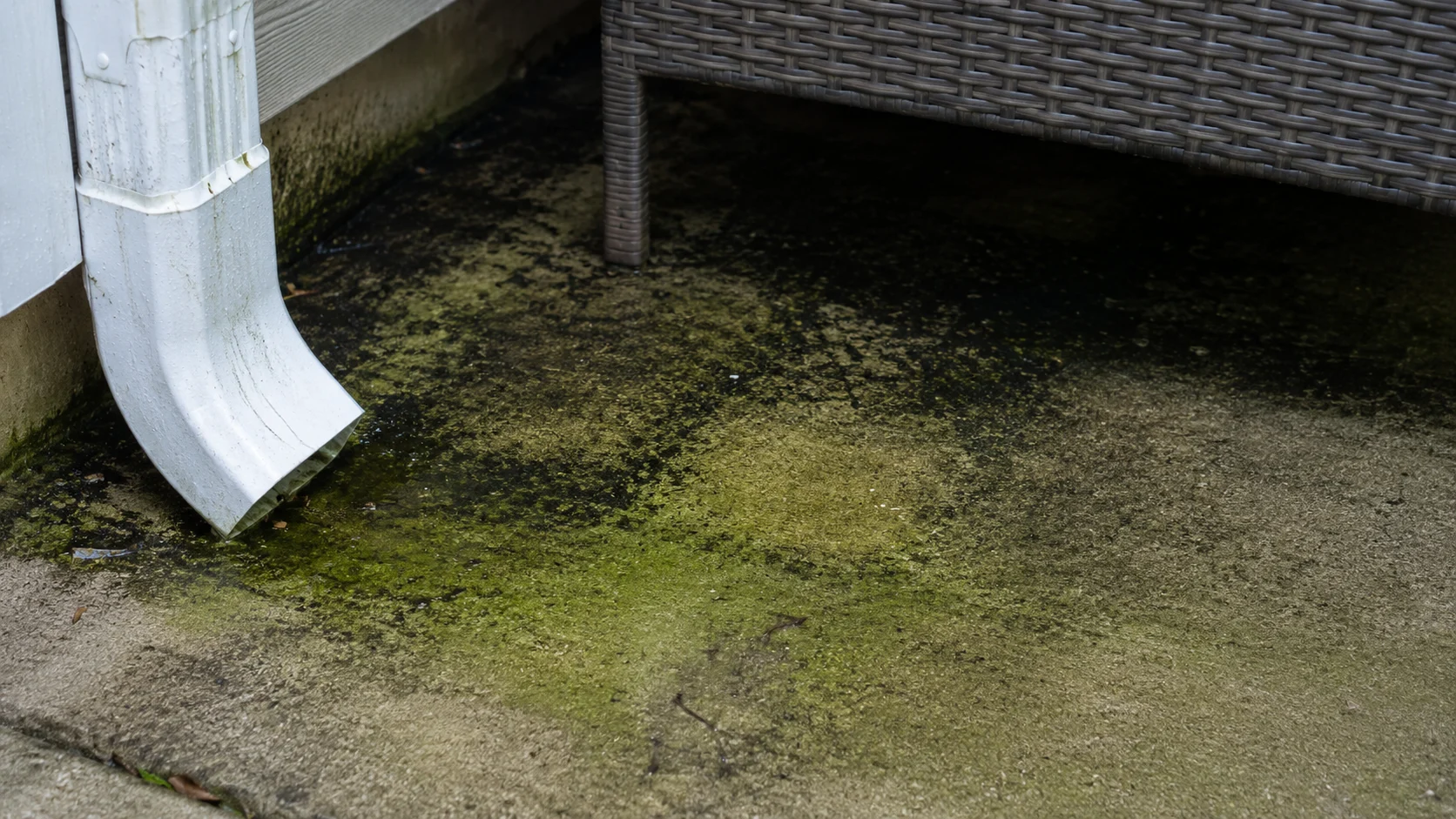
Pour two identical concrete patios on the same street, finish them the same day, and walk the block a year later. One looks nearly new. The other has a green-black film creeping out from under the eaves, rust freckles around the chair legs, and a chalky white haze near the downspout. Same concrete, same weather, wildly different results. After a decade running pressure-washing and soft-wash crews along the Gulf Coast, I can usually tell you why before I even unspool a hose. The difference is rarely the slab itself — it's water, shade, and what's growing or draining onto it.
This guide walks through every common reason a concrete patio gets dirty, why each one happens, and what actually slows it down. None of it requires a chemistry degree. Most of it is just understanding that concrete is a sponge, and a sponge stays dirty when it stays wet.
Concrete Is Porous — That's the Root of Almost Everything
Here's the single fact that explains most patio staining: concrete is full of tiny interconnected pores. Even a smooth, broom-finished slab is riddled with capillaries that wick up water and hold it. That moisture is a feature for plants and a problem for you, because nearly every stain on a patio is either a living thing that needs water or a substance that water carried into the surface.
Once you accept that concrete behaves like a hard sponge, the rest follows logically. Anything that keeps the slab damp — shade, poor drainage, overhanging trees, a leaky downspout — gives stains a place to take hold. Anything that helps it dry quickly — sun, airflow, a slope that sheds water — keeps it cleaner. Sealing matters because it fills and caps those pores so water beads off instead of soaking in.
Green Algae and Black Mildew: The Shade-and-Humidity Problem
The most common complaint I hear is some version of “why is my patio turning green?” That green film is algae — a simple plant that needs only three things: moisture, indirect light, and airborne spores that land everywhere for free. The dark gray-to-black staining that often comes with it is mildew and mold, fungal organisms that feed on dust, pollen, and organic film sitting on the surface.
Both thrive in the same conditions, which is why you usually see them together:
- Shade. North-facing patios and areas under a covered roof or large tree never get the direct sun that would dry and sterilize them. Shade is the number-one predictor of green growth.
- Humidity and poor airflow. Enclosed patios, screened porches, and slabs tucked against the house with shrubs crowding the edges hold humid air. Stagnant, damp air is algae's ideal climate.
- Constant moisture. A downspout that dumps onto the slab, an irrigation head that mists the patio, or a low spot that never drains keeps one zone perpetually wet — and that's exactly where the green starts.
This is why a patio can be spotless in the open and pitch-black green right where the roofline casts shade all afternoon. The concrete is identical; the microclimate isn't. If you want the deeper cleanup playbook for the black stuff specifically, our guide on how to remove mold from a concrete patio covers the products and dwell times that actually work.
How to slow it down
Trim back shrubs and tree limbs to let in light and air — even a couple hours of direct sun a day makes a measurable difference. Redirect downspouts away from the slab, fix the irrigation head that's spraying the wrong direction, and clear leaf litter that holds moisture against the surface. A periodic gentle wash removes the organic film fungi feed on before it has a chance to root in.
Leaf and Organic Tannin Stains
If you have oaks, magnolias, sweetgums, or really any tree shedding leaves and seed pods, you've probably seen brown blotches that look almost like the shadow of a leaf burned into the concrete. Those are tannin stains. Tannins are natural plant compounds — the same family of pigments that stains a coffee mug — and when wet leaves sit on porous concrete, the tannins leach out and soak into the pores.
The fix is to not let leaves sit. Blow or sweep the patio regularly, especially in fall and after storms, and never leave a damp pile in one spot for days. Fresh tannin stains usually lift with a good cleaning; old ones that have been baked in by the sun are stubborn and may need an oxygen-bleach treatment to fully break down the pigment. One thing worth knowing: tannin stains often look worse after rain and then fade as the slab dries, which fools people into thinking they're gone. They're not — the pigment is still in the pores, just less visible while wet. Treat them when the concrete is dry so you can actually see what you're working on.
Rust: Metal Furniture and Iron in the Water
Those orange-brown streaks and rings have two usual suspects. The first is metal furniture — chair and table legs, a forgotten grill, planters with metal bases. When the metal stays wet, it oxidizes, and the rust bleeds out onto the concrete and wicks into the pores. The second, and the one people miss, is irrigation. Many wells and even some municipal supplies carry dissolved iron. Every time a sprinkler arcs across the patio, it lays down a fine film of iron-rich water that oxidizes into a rusty stain, often in a fan-shaped pattern that matches the sprinkler's throw.
Rust doesn't respond to ordinary soap or even bleach — it needs an acidic or oxalic-acid-based rust remover to dissolve the iron. Prevention is easier: put glides or feet under metal furniture, move pieces periodically so water can't pool under them, and adjust sprinkler heads so they water the lawn, not the slab.
Efflorescence: The White Mineral Haze
The chalky white film or crust that shows up on concrete — especially newer slabs and areas near downspouts or constant moisture — is efflorescence. This one confuses people because it isn't dirt landing on the surface; it's coming from inside the concrete. Water moving through the slab dissolves natural mineral salts, carries them to the surface, and evaporates, leaving the salt behind as a white deposit.
Because it's mineral salt, scrubbing with soap does almost nothing. Light efflorescence often wears away on its own or rinses off; heavier deposits usually need a diluted acidic cleaner made for the job. The real cure is moisture control: the less water that migrates through the concrete, the less salt gets deposited. That means managing drainage and, for many patios, sealing the surface to slow water movement. Efflorescence is also a clue — if it keeps coming back, you have a moisture source worth tracking down.
Oil, Grease, and Pollen Films
Two more everyday culprits round out the list. Oil and grease come from grills, vehicles if the patio doubles as parking, dropped food, and citronella torches. Petroleum soaks straight into porous concrete and leaves a dark stain that ordinary cleaning smears around rather than removes, because oil and water don't mix. Fresh spills should be blotted (not wiped) and covered with an absorbent like cat litter or baking soda before treating with a degreaser. Our dedicated walkthrough on getting oil stains off a concrete patio covers the poultice method for the deep ones.
Pollen is the seasonal one. In spring, a yellow-green dust settles over everything and forms a sticky film when it gets damp. On its own it's mostly cosmetic and rinses off easily, but left alone it becomes food for the mildew we talked about earlier. A quick spring rinse keeps pollen from turning into a longer-term staining problem.
Plain Old Dirt and Clay
Don't overlook the obvious. Wind-blown soil, splash-up from flower beds during rain, and red clay tracked across the surface all ground into the pores over time. Clay especially is a Gulf Coast and Southeast nightmare because its fine particles and reddish pigment wedge deep into the texture. Mulch beds and bare soil right at the patio edge are the usual sources. A border of edging, gravel, or simply keeping beds mulched and contained cuts down on how much sediment washes onto the slab every storm. Pay attention to grade, too: if the ground slopes toward the patio, every rain delivers a fresh wash of muddy runoff. Even a small berm or a strip of gravel can divert that flow and dramatically reduce how often the slab needs scrubbing.
The Big Picture: Why Some Patios Stay Clean
Step back and you'll notice every cause above traces to the same handful of drivers: moisture that lingers, shade that prevents drying, organic debris that feeds growth, and a porous surface that absorbs it all. Control those and you control the dirt. Here's the short list of what genuinely moves the needle:
- Improve airflow and light. Trim trees and shrubs back from the slab so it dries faster and gets some direct sun.
- Manage water. Redirect downspouts off the patio, fix sprinklers that hit the concrete, and correct low spots that pond.
- Clear debris routinely. Sweep or blow off leaves, pollen, and dirt before they stain or feed growth.
- Seal the concrete. A quality penetrating or film-forming sealer caps the pores so water, oil, and stains bead off instead of soaking in. It doesn't make a patio stain-proof, but it buys you time and makes every future cleaning easier.
- Clean on a schedule. A maintenance wash once or twice a year removes film before it becomes a deep stain.
DIY vs. Hiring a Pro
Plenty of patio cleaning is well within DIY range. A routine algae or pollen wash, a fresh tannin or oil spill, light dirt — if you're comfortable with a garden hose, a stiff brush, and the right cleaner, our step-by-step on how to clean a concrete patio will get you there. The most important DIY rule: match the cleaner to the stain (degreaser for oil, oxalic acid for rust, mild acid for efflorescence, oxygen bleach for organic growth) and go easy on pressure. A too-aggressive pressure washer in untrained hands etches concrete permanently, leaving wand marks you can never wash out.
Bring in a pro when the job is big, high up, or risky: large or heavily stained slabs, set-in rust or oil, anything involving climbing or working around delicate landscaping, or when you simply don't want to buy and store the chemicals. Professionals also offer soft-washing — low-pressure cleaning with the right solution — which is the safe way to kill algae and mildew without scarring the surface. If you're weighing the cost, our patio cleaning cost guide breaks down typical pricing by slab size and condition, and our city pages get specific. You can compare local rates in places like Katy, TX, Sugar Land, TX, and The Woodlands, TX — each city page includes a free cost calculator so you can estimate your job in a minute before you ever call anyone.
The honest takeaway after years of doing this work: a dirty patio is almost never a defect in the concrete. It's a story about water and shade. Read that story — where it stays wet, where the sun never reaches, what's growing or dripping onto it — and you'll know both why it got dirty and exactly what to change so it stays clean longer.
Common questions
Frequently asked
Why does my concrete patio keep turning green?+
That green film is algae, a simple plant that needs moisture, indirect light, and airborne spores — all of which it finds easily on a shaded, damp slab. North-facing patios, areas under trees or a roof, and spots near downspouts or sprinklers stay wet and never get enough sun to dry out, so the algae keeps coming back until you fix the moisture and shade.
Does sealing a concrete patio stop stains?+
Sealing helps a lot but isn't magic. A good sealer fills the pores so water, oil, and dirt bead off instead of soaking in, which means fewer stains and far easier cleaning. It won't make a patio truly stain-proof, and it wears over time, so most slabs need resealing every few years. Think of it as buying time, not permanent protection.
How often should I clean my concrete patio?+
A light maintenance wash once or twice a year keeps most patios in good shape by removing pollen, algae film, and dirt before they stain. Shaded, humid, or tree-covered patios may need more frequent attention, while sunny, well-drained ones can go longer. Regular sweeping of leaves and debris between washes does more good than people expect.
What is the white powder on my concrete patio?+
That chalky white haze is efflorescence — natural mineral salts that water carries up from inside the concrete and leaves behind as it evaporates. It's common on newer slabs and near constant moisture. Soap won't remove it; light cases rinse or wear off, and heavier deposits need a diluted acidic cleaner. If it keeps returning, you have a moisture source worth tracking down.
Marcus Reyes · Senior Cleaning Guides Editor
Marcus Reyes spent over a decade in residential exterior cleaning and concrete surface care before moving into editorial work. He came up running pressure-washing and soft-wash crews across the Gulf Coast, where he handled everything from algae-covered patios to set-in oil stains and sealing jobs in high-humidity conditions. He now writes and edits Concrete Patio Cleaning's how-to library, translating field experience into plain-language guidance homeowners can actually use. Marcus focuses on what works, what damages a surface, and when a job is genuinely worth hiring out — drawing on the hands-on trade-offs he learned on the job rather than theory.
Background: 10+ years hands-on residential pressure-washing, soft-wash, and concrete sealing.