Houston metro · county hub
Concrete Patio Cleaning in Fort Bend County, TX
Local cleaning advice, costs and vetted pros across Fort Bend County.
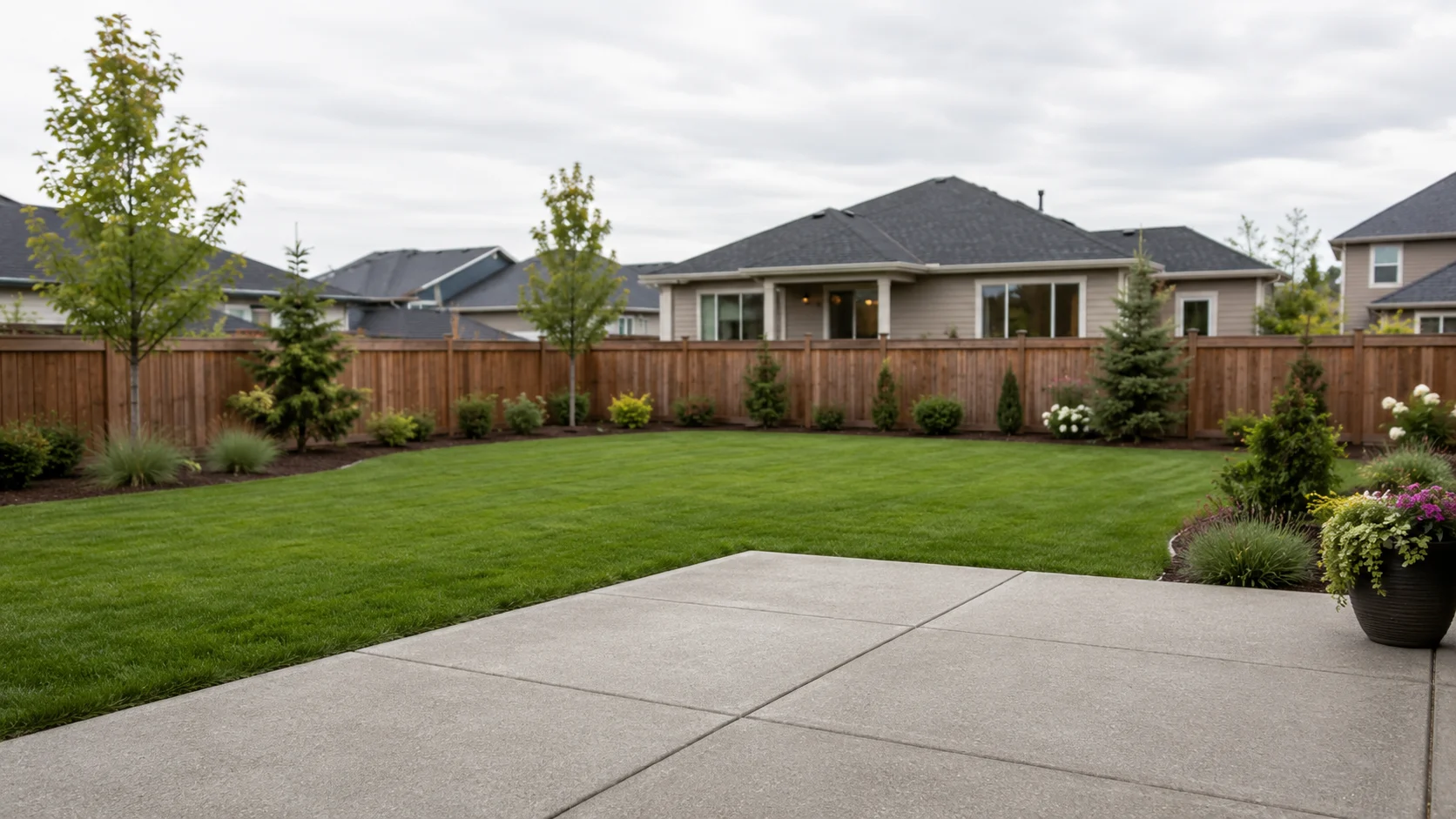
A County Built Around the Backyard
Fort Bend County is where the Houston metro went to spread out, and the proof is in the hardscape. Drive through almost any neighborhood here and the pattern repeats: wide rear patios, full pool decks wrapping around tanning ledges and spa spillovers, stamped-concrete walkways, and paver driveways laid down in the last fifteen to twenty-five years. This is newer housing stock by Texas standards, much of it inside master-planned communities that were designed from the ground up around outdoor living. Builders did not tuck a four-by-four slab against the back door and call it done. They poured broom-finished entertaining areas, set covered loggias on concrete, and ran decorative borders through the surrounding patios. The result is a county with far more square footage of decorative and structural concrete per home than the older neighborhoods closer to downtown Houston, and far more surface that needs to be kept clean.
That character shapes everything about how concrete and patio cleaning works out here. A pressure washing visit in Fort Bend is rarely a quick rinse of a small porch. It is more often a full afternoon of working across a large connected expanse of slab, deck, and walkway, often with a pool in the middle of it and a covered structure casting shade over part of the area for most of the day. The size and the shade are not incidental details. They are the two things that decide how dirty these surfaces get, how fast they get that way again, and what a thorough cleaning actually has to address.
The Cities That Make Up Fort Bend
The county stretches from the fast-growing western edge of the metro through its older river towns, and each community brings its own version of the same hardscape story. Fulshear sits out on the leading edge of the growth corridor, where some of the newest master-planned communities in the region are still being completed; its concrete is young, its pool decks are large, and its patios were poured to current outdoor-living standards. Sugar Land anchors the county's established suburban core, with mature master-planned neighborhoods whose stamped patios, paver drives, and pool surrounds have now seen enough seasons to show real biological staining. Katy straddles the county line and brings the same big-patio, covered-loggia building pattern that defines the western suburbs. Missouri City and the river cities of Richmond and Rosenberg round out the county, mixing newer subdivisions with longer-standing neighborhoods, so a cleaning pro working here moves between freshly cured slabs and surfaces that have been quietly collecting algae for a decade. These cities are close enough that the climate, the soil, and the building styles are shared, but they are different enough that the right cleaning approach depends on which community you are standing in.
How Gulf Coast Humidity Plays Out on Fort Bend Hardscape
Every part of greater Houston fights humidity, but Fort Bend's particular combination of large slabs and heavy shade makes the fight more visible here than in most places. The enemy is biological, not just dirt. The Gulf Coast feeds a year-round supply of moisture, and concrete is a porous, mineral-rich surface that holds that moisture in its pores long after a rain has passed. Where that damp surface also sits in shade, you get the perfect nursery for algae, black mildew, and mold. The green-black film that creeps across a north-facing patio, the dark blotching under a covered loggia, the slick coating in the low spots of a pool deck where splash-out never fully dries: these are living colonies, and they are the signature stain of this county.
The reason Fort Bend sees it so badly comes back to the angle of the housing stock. Big patios mean big shaded zones, especially under the covered outdoor rooms that came standard on so many of these newer homes. Pool decks add constant moisture from splashing, evaporation, and the humid envelope of air that sits over the water. The textured, slip-resistant finishes that are smart around a pool, like broom finishes, knockdown textures, and the joint lines between pavers, are also microscopic pockets that trap spores, organic debris, and water. Tree canopy in the established master-planned neighborhoods adds leaf litter and even deeper shade. Put all of that together and you get surfaces that do not just get dirty once; they regrow. Unlike a dusty driveway in a dry climate, a Fort Bend patio that is only rinsed will be green again within months, because the cleaning removed the visible growth but left the conditions that produce it.
When to Clean in This Climate
There is no true off-season for biological growth on the Gulf Coast, but timing still matters. Many homeowners here clean in spring, ahead of the long outdoor-living season, so the patio and pool deck are fresh before months of heavy use. A second pass in early fall is common, clearing the buildup that accumulated through the humid summer and removing the organic load before cooler, damper months settle in. Because regrowth is the defining problem in Fort Bend, the most useful schedule is not a single annual blast but a rhythm: clean, treat to slow the regrowth, and watch the shaded zones, which will always discolor first. The shaded side of a covered patio and the perpetually damp crevices of a pool deck are your early-warning system. When they start to darken, the rest is not far behind.
Cleaning Versus Sealing in the Fort Bend Microclimate
Cleaning and sealing solve different problems, and in this county both are worth understanding. Cleaning removes what is already there. The most effective approach for biological staining is not raw high pressure, which can etch and fuzz a decorative surface, but a soft-wash method using the right cleaning solutions to actually kill the algae and mildew at the root, followed by controlled rinsing. That distinction matters enormously on stamped concrete and pavers, where blasting away the surface or the joint sand causes lasting damage.
Sealing is the longer game. A quality sealer on stamped or decorative concrete reduces how readily the surface absorbs moisture, which slows the return of growth and makes the next cleaning easier and gentler. In a humid microclimate like Fort Bend's, that buys real time. But sealer wears, especially under foot traffic and pool chemicals, and a worn or improperly applied sealer can trap moisture or cloud. The honest sequence is to clean first, let the surface dry thoroughly, then seal, rather than locking dirt and live growth under a fresh coat. Around pools, breathable sealers and slip-resistant additives matter, because a sealed deck that becomes slick defeats the purpose.
What Drives Cost Locally
Pricing in Fort Bend tends to track a few specific things, and they are not mysterious once you know what the local jobs look like:
- Patio and deck size. This is the biggest single factor. The large connected slabs and full pool surrounds typical of these communities simply take more time and material than a small porch.
- Surface type. A plain broom-finished slab is straightforward. Stamped concrete, exposed aggregate, and pavers all require slower, gentler, more careful work, which costs more than blasting bare gray concrete.
- Severity of growth. A surface kept on a maintenance rhythm cleans fast. One that has been left to grow heavy black mildew for years needs stronger treatment and more passes.
- Pool-deck complexity. Crevices, coping, joint lines, tanning ledges, and the tight, detailed areas around spas and spillovers add labor that an open patio does not.
- Treatment and sealing add-ons. A post-clean biological treatment to slow regrowth, or a sealer application, adds to the base price but changes how the surface holds up.
Common Surfaces in the Area's Newer Housing
Knowing what you are standing on helps you ask for the right service. In Fort Bend's newer housing stock you will most often find broom-finished structural concrete on the main patio, stamped concrete shaped and colored to mimic stone or tile on decorative patios and walkways, exposed aggregate on some older decks, interlocking concrete pavers on driveways and pool surrounds, and travertine or stone pavers around higher-end pools. Each wants a different touch. Stamped and decorative concrete need soft washing and sealer-safe products. Pavers need joint sand preserved and sometimes replenished. Stone needs cleaners matched to the material so the surface is not etched.
What to Ask a Pro
A short list of questions separates a careful contractor from someone with a rented machine:
- Do you soft wash decorative and stamped concrete rather than relying on raw high pressure?
- Do you apply a treatment that actually kills algae and mildew, so it does not regrow within weeks?
- How do you protect joint sand on pavers and the edges around the pool?
- Do you offer sealing, and will you let the surface fully dry before sealing?
- Are you familiar with HOA expectations in master-planned communities here, since many neighborhoods have standards for keeping driveways, walks, and patios free of staining?
Fort Bend's whole appeal is the backyard, the pool deck, and the outdoor room. Keeping that hardscape clean is not a cosmetic afterthought in this county; it is part of how these homes were meant to be lived in. Understanding the humidity, the shade, and the surfaces is what turns an annual chore into a manageable rhythm that keeps these large, well-built outdoor spaces looking the way they were designed to look.
Typical cost in Fort Bend County
What a patio cleaning runs here
$150 – $208
Standard clean, ~300 sq ft, moderate algae and mildew.
$428 – $1,153
Same job, cleaned and sealed to slow Gulf Coast regrowth.
Pick your city below for an exact local estimate and one free quote.
Cities we serve in Fort Bend County
6 towns covered
Common questions
Patio cleaning in Fort Bend County
Why does my Fort Bend pool deck get slimy and green so quickly?+
Pool decks here sit in a near-constant moisture envelope from splash-out, evaporation, and Gulf Coast humidity, and the textured, slip-resistant finishes trap spores and organic debris. That combination feeds algae and mildew year-round, especially in shaded low spots and crevices. Cleaning removes the growth, but a follow-up biological treatment is what actually slows how fast it returns on a deck like yours.
Can stamped concrete and pavers be pressure washed safely?+
They can be cleaned, but not with raw high pressure, which etches stamped concrete, fuzzes the surface, and blasts joint sand out of pavers. The right approach is soft washing with cleaning solutions that kill algae and mildew at the root, followed by controlled rinsing. On pavers, a good pro preserves and replenishes joint sand. Decorative surfaces in Fort Bend's newer homes specifically need this gentler method.
We just built in a new community. How long before we can clean and seal the concrete?+
New concrete needs to cure before sealing, typically about 28 days, and often longer before a sealer bonds well. You can rinse light construction dust sooner, but hold off on aggressive cleaning or sealing until the slab has cured. Many Fort Bend homeowners clean once early growth appears, let the surface dry fully, then seal to slow regrowth in this humid climate.
When is the best time of year to clean a patio in Fort Bend County?+
There is no true off-season for algae here, but spring and early fall are the most practical windows. A spring cleaning freshens patios and pool decks before the long outdoor-living season; an early-fall pass clears the heavy biological buildup left by the humid summer. Watching the shaded zones and pool-deck crevices, which discolor first, tells you when the next cleaning is due.
Does my HOA in a master-planned community expect a certain standard for driveways and patios?+
Many master-planned neighborhoods in Fort Bend have standards covering visible staining on driveways, walkways, and front-facing concrete, and heavy black mildew can draw a notice. A pro familiar with local communities can keep these surfaces within expectations. Keeping a maintenance rhythm, rather than waiting for years of buildup, makes compliance easier and the cleaning faster and gentler.
What makes one Fort Bend cleaning quote higher than another?+
The big drivers are patio and pool-deck size, surface type, and how severe the growth is. Large connected slabs and full pool surrounds take more time; stamped concrete, exposed aggregate, and pavers need slower, careful work; and years of heavy black mildew require stronger treatment and more passes. Pool-deck crevices, coping, and tight detail areas add labor, as do treatment and sealing add-ons.