Houston metro · county hub
Concrete Patio Cleaning in Montgomery County, TX
Local cleaning advice, costs and vetted pros across Montgomery County.
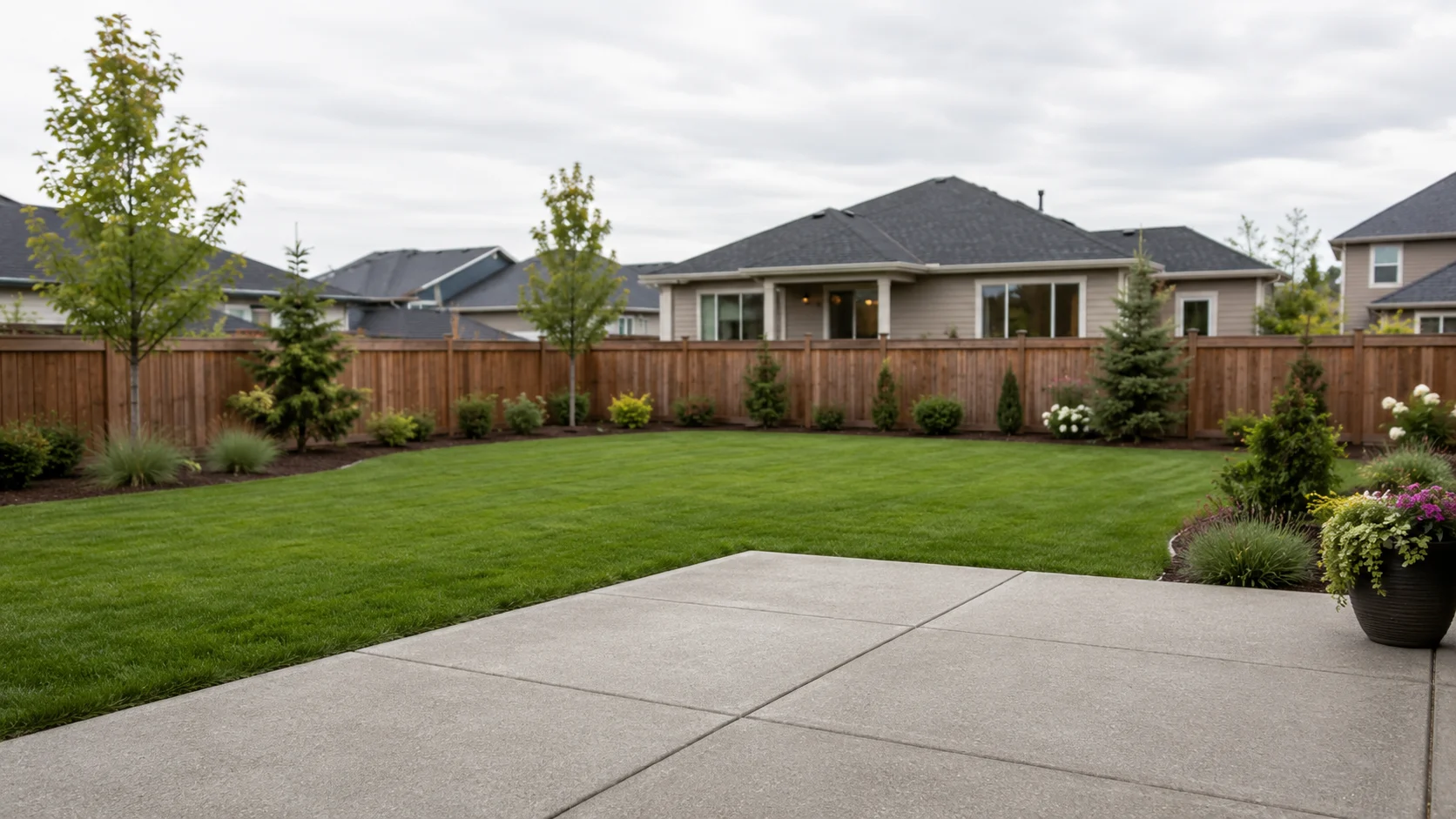
The County the Trees Built
Montgomery County is, more than almost anywhere else in the Houston metro, a place defined by what grows above your patio rather than what sits on it. Drive through The Woodlands and you are moving beneath a continuous ceiling of loblolly pine, water oak, sweetgum, and hardwoods that were deliberately preserved when the community was carved out of the East Texas forest. That canopy is the single biggest reason concrete and patio cleaning behaves differently here than it does on the open, sun-baked prairies south of the metro. Where other areas fight chalky dust and sun fade, homeowners across this county fight the slow, organic work of a forest that never really stops dropping debris onto their hardscape.
The practical consequence is twofold, and both halves matter. First, leaf litter from oaks and sweetgums is loaded with tannins, the same plant compounds that turn tea brown. When wet leaves, acorns, catkins, and pine needles sit on light gray concrete for days, those tannins leach out and bond into the surface, leaving rust-toned and amber blotches that a garden hose simply will not touch. Second, the dense shade that makes a wooded lot so comfortable in July is exactly the condition that mold, mildew, and algae crave. Sunlight is the natural disinfectant for a slab; under a thick pine and hardwood canopy, large stretches of patio and walkway may go weeks without a direct ray, and that is where the green and black film takes hold first.
Where Gulf Coast Humidity Meets a Forest Roof
Every county in this region deals with humid Gulf air, but Montgomery County compounds the problem in a specific way. Moisture that rolls inland off the coast gets trapped under the canopy instead of burning off. A shaded slab in Spring or The Woodlands stays damp long after a sunny patio in a treeless subdivision has dried. That lingering dampness, combined with a steady rain of organic food in the form of fallen leaves and pollen, is a near-perfect culture medium. The result is that the same square of concrete can carry three different problems at once: a slick green algae bloom in the shadiest corner, a black mildew haze along a north-facing wall, and tannin staining wherever a pile of leaves was left to decompose.
This is why so many homeowners here describe their patios as "always a little dirty" no matter how often they sweep. Sweeping removes the leaves but not the stain they left behind, and it does nothing for the biological film that regrows in the humidity. A maintenance plan that ignores either the tannins or the shade-driven growth will fall short within a season.
The Cities We Cover
This directory connects you with concrete and patio cleaning pros across the heart of Montgomery County. That includes The Woodlands, the master-planned community whose preserved tree cover is the clearest example of the canopy challenge described above, and neighboring Spring, where wooded older subdivisions and newer developments share the same shade-and-humidity equation. To the north, the county seat of Conroe spreads around the recreation and lakeside areas where moisture and tree cover go hand in hand, while the historic town of Montgomery anchors the rolling, wooded country to the west. Magnolia, with its mix of established homesteads and growing neighborhoods set among pines and hardwoods, and Willis, sitting near the northern lake country, round out the core service area. Across all of these communities the underlying story is the same: heavy canopy, lingering dampness, and surfaces that need more than a quick rinse to truly come clean.
When to Clean in a Wooded Microclimate
Timing matters more under trees than out in the open. The biggest debris loads here come in two waves. Spring brings a heavy dump of pine pollen, oak catkins, and the yellow-green dust that coats every horizontal surface, and it is sticky enough to glue itself to concrete once the first rain hits. Fall and early winter bring the leaf drop from oaks and sweetgums, which is when most tannin staining begins. For many homeowners the most effective rhythm is a thorough cleaning in late spring once the pollen wave has passed, and a second pass in late fall or winter after the bulk of the leaves are down. That schedule clears the two debris events that do the most damage and resets the surface before staining and biological growth can dig in.
Between professional cleanings, the single most useful habit is keeping leaf piles off the slab. Tannin staining is largely a function of contact time. A leaf that blows across the patio does little harm; a wet mat of leaves sitting in a shaded corner for two weeks is what creates the stubborn brown blotches. Blowing or sweeping debris off promptly buys you a great deal.
Cleaning Versus Sealing Under Heavy Canopy
Sealing is often pitched as the cure-all, but under a dense canopy the calculus is different. A sealer can make a slab easier to rinse and can slow tannin penetration, which is genuinely helpful given how much leaf litter falls here. At the same time, a slick film-forming sealer on a shaded, perpetually damp surface can become a slip hazard and can trap moisture if applied to a slab that never fully dries. In this county the better approach is usually a clean-first, seal-selectively strategy: get the surface professionally cleaned and fully dry, then consider a breathable penetrating sealer on the areas most exposed to leaf drop. High-shade zones that stay wet are often better served by regular cleaning and good debris management than by a heavy topcoat. A reputable pro should walk your specific lot and tell you which sections are sealing candidates and which are not, rather than coating everything by default.
What Drives Cost Locally
Pricing in Montgomery County tends to track a few canopy-specific factors. The first is tannin severity: a slab with years of baked-in leaf staining may need a dedicated stain treatment beyond a standard surface wash, and that adds labor. The second is shade regrowth speed. Surfaces that sit in deep, constant shade rebloom with algae and mildew faster, so a pro may recommend a treatment that suppresses regrowth rather than just a one-time wash, and that level of service costs more than a basic rinse. The third is surface type. Broom-finished concrete cleans up readily; the stamped concrete, exposed aggregate, brick pavers, and natural stone common on patios across these communities have textured surfaces and joints that hold organic growth and require more careful, lower-pressure methods. As a rough guide, expect simple driveway and walkway cleaning to fall in the lower price tiers, while heavily stained or intricately surfaced patios under full canopy sit higher.
What to Ask a Pro
Because the local problem is organic and shade-driven, the right questions are specific. Ask whether they use soft washing or surface cleaning rather than relying on raw high pressure, which can etch concrete and blast out paver sand. Ask how they treat tannin stains specifically, since these need the right cleaning chemistry, not just more PSI. Ask whether they apply a treatment that discourages algae and mildew regrowth, which is the recurring battle under canopy. If you are considering sealing, ask which sections of your lot they would seal and which they would leave breathable, and why. Finally, ask how they handle the surrounding landscape and any nearby water features, since responsible runoff control matters on wooded, sloping lots.
Common Patio Surfaces in the Area
The housing across this county runs from established homes shaded by mature trees to newer construction in developing neighborhoods, and the patio surfaces reflect that range. You will find a lot of broom-finished poured concrete on driveways and back patios, decorative stamped concrete meant to mimic stone or brick, exposed aggregate, interlocking concrete and brick pavers around outdoor living spaces and pool decks, and natural stone on higher-end builds. Each reacts differently to the canopy. Smooth concrete shows tannin staining most plainly but cleans up the easiest; textured and jointed surfaces hide growth in their crevices and demand a gentler, more thorough approach. Knowing which surface you have helps you and your chosen pro pick a method that gets the slab clean without damaging it.
Typical cost in Montgomery County
What a patio cleaning runs here
$150 – $208
Standard clean, ~300 sq ft, moderate algae and mildew.
$428 – $1,153
Same job, cleaned and sealed to slow Gulf Coast regrowth.
Pick your city below for an exact local estimate and one free quote.
Cities we serve in Montgomery County
6 towns covered
Common questions
Patio cleaning in Montgomery County
Why does my concrete have brown stains even though I rinse it regularly?+
Those are almost certainly leaf-tannin stains, common throughout Montgomery County because of the heavy oak, sweetgum, and pine canopy. When wet leaves and acorns sit on a slab, tannins leach out and bond into the concrete. A hose rinses surface dirt but not these embedded stains, which need a dedicated tannin treatment and the right cleaning chemistry to lift fully.
Why is the north side of my patio always green or black while the rest looks fine?+
Under the dense canopy in The Woodlands, Spring, and similar areas, north-facing and deeply shaded sections rarely get direct sun. Combined with trapped Gulf Coast humidity, they stay damp far longer, and algae and mildew thrive in exactly those conditions. That is why one corner stays green and slick while sunnier stretches dry out and stay cleaner between cleanings.
Should I seal my patio if it sits under heavy trees?+
Sometimes, but not everywhere. A breathable penetrating sealer can slow tannin staining on areas hit hardest by leaf drop. However, a film-forming sealer on a shaded, perpetually damp slab can trap moisture and become slippery. The best practice here is to clean first, let the surface dry fully, then seal only the sections that benefit, leaving deep-shade zones breathable.
When is the best time of year to have my concrete cleaned in this area?+
Two windows work well given the local tree cover. Late spring, once the heavy pine pollen and oak catkin drop has passed, clears the sticky yellow-green coating. Then late fall or winter, after most leaves are down, removes the debris that causes tannin staining. Cleaning around these two debris waves resets the surface before stains and growth set in.
Does pine pollen and sap really need professional cleaning?+
Often, yes. The spring pollen wave across Magnolia, Conroe, Willis, and the rest of the county is sticky and bonds to concrete once rain hits, and pine sap is even more stubborn. Both resist plain water and can hold biological growth. A proper surface cleaning or soft wash with the right detergents removes pollen film and sap far more effectively than a garden hose.
What does patio cleaning cost in Montgomery County?+
Pricing depends on canopy-specific factors: how severe the tannin staining is, how fast a shaded area regrows algae, and your surface type. Simple broom-finished driveways and walkways fall in the lower tiers, while heavily stained or textured surfaces like stamped concrete and pavers under full shade sit higher because they need lower-pressure, more careful methods and sometimes a regrowth-suppressing treatment.