Driveway cleaning · Florida · county hub
Driveway Cleaning in Pasco County, FL
HOA-compliance help, local costs and vetted pros across Pasco County.
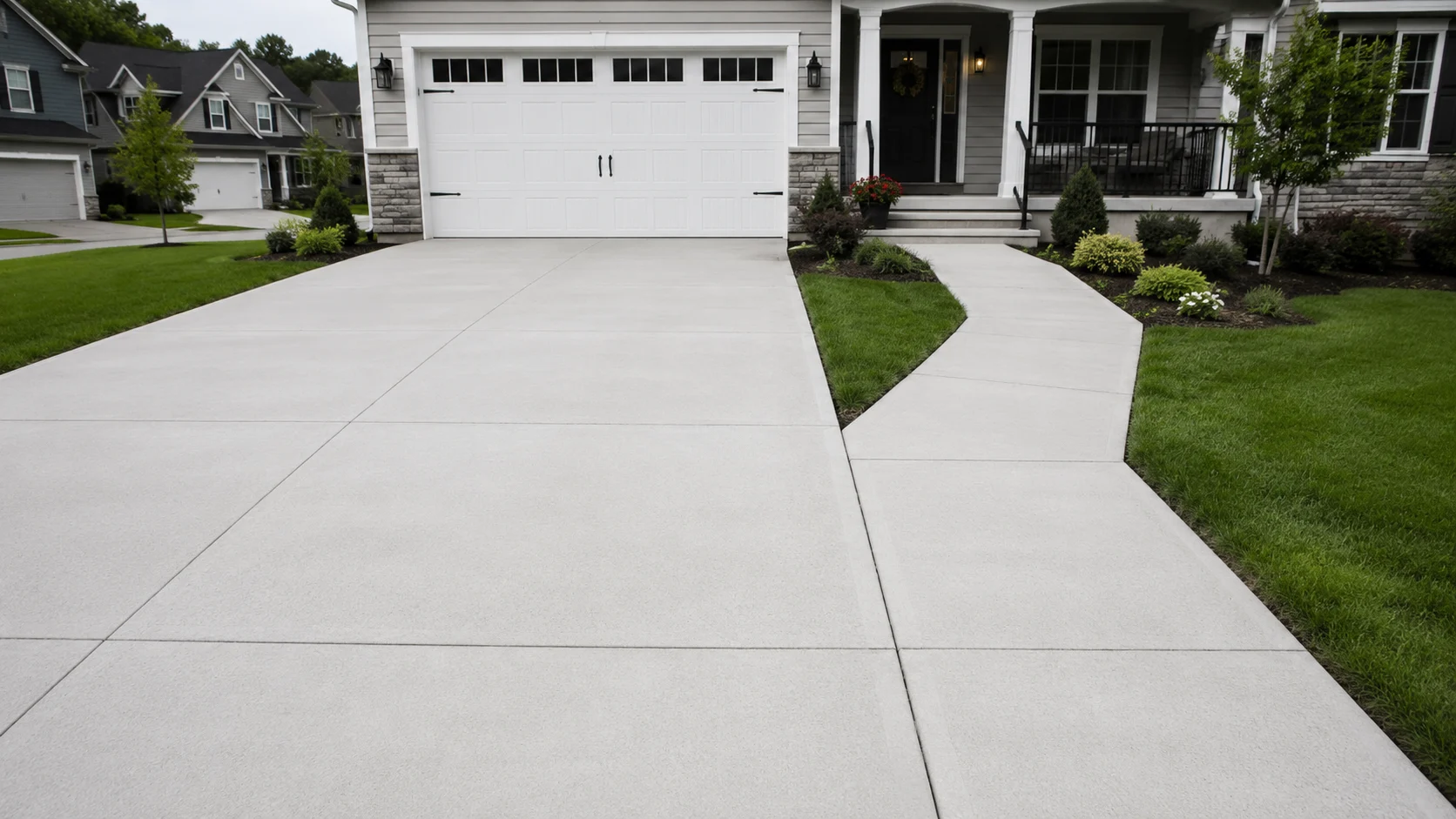
Driveway Cleaning in Pasco County: Keeping Brand-New Concrete HOA- and CDD-Ready
Pasco County is one of the newest faces of the Tampa Bay region, and that shows up the moment you turn into almost any neighborhood here. Where parts of Florida are defined by decades-old slabs and shade-darkened pavers, Pasco is defined by the opposite: master-planned communities, freshly poured concrete, and driveways that were broom-finished only a season or two ago. Wesley Chapel, Land O' Lakes, and Trinity have grown into a sprawl of HOA- and CDD-governed subdivisions where the streetscape is part of the product. That newness is exactly why driveway cleaning works differently in Pasco than it does almost anywhere else in the state. You are not usually rescuing a forty-year-old driveway from decline. You are protecting a near-new surface that the community expects to look its best, on a slab that is still curing and chemically vulnerable, while fighting a Florida climate that goes to work on bright concrete within weeks.
This page is a practical guide for homeowners across Pasco County who want to keep a driveway clean without violating community standards, damaging fresh concrete, or paying for the wrong service. We cover the compliance pressure unique to newer master-planned neighborhoods, the specific stains the local environment produces, the right cleaning method for newer housing stock, when to clean, what drives the price, and the questions worth asking before you hire anyone.
The HOA and CDD Compliance Headline
In most of Pasco's growth corridor, your driveway is governed twice over. There is the HOA, which enforces architectural and appearance standards, and in many communities there is also a CDD, a Community Development District, which funds and oversees the infrastructure and the look of the common areas and streetscapes. The combination means appearance enforcement here is unusually active. It is one of the most common reasons Pasco homeowners get a cleaning service to begin with, and it surprises people who assumed a new driveway would stay clean on its own.
The pattern is predictable. A family closes on a new build in a Wesley Chapel or Land O' Lakes community, the concrete looks flawless, and within a few months a faint gray or greenish cast creeps across the surface. Then comes the violation notice, often citing "mildew," "staining," or a driveway that is "not maintained in a clean and uniform condition" with the rest of the street. Because everything in the neighborhood was built around the same time and the houses sit close together, an uneven, streaky, or algae-spotted driveway stands out immediately against the matching slabs next door. That visual contrast is what triggers complaints and drive-by inspections more than any single stain would on its own.
A few things help homeowners stay ahead of it. Read your community's covenants for any language on driveway and walkway maintenance and the cure period you are given after a notice, which is frequently short. Keep a record of when you last had the driveway professionally cleaned. And treat cleaning as routine maintenance on a schedule rather than a reaction to a letter, because in these communities the notice usually arrives well after the problem became visible from the street.
What Actually Stains a Pasco Driveway
Florida humidity is the engine behind most of what you will see, and Pasco's mix of new concrete, lawn irrigation, and tree pollen produces a recognizable set of stains.
Black and green algae (Gloeocapsa magma). This is the headline problem. The same humidity-loving organism that streaks Florida roofs settles onto driveways, sidewalks, and pavers. On bright new concrete it can establish a visible gray, green, or black film within weeks, especially on the shaded side of the driveway, under the tree the builder planted, or along edges that stay damp. It is biological, so it keeps growing and spreading until it is killed at the root, not just rinsed off. This is the single most common driveway complaint across Wesley Chapel, Land O' Lakes, and Trinity.
Orange sprinkler rust from well water. Many Pasco properties, particularly in the more spread-out Land O' Lakes area and on larger lots, run irrigation off well water that carries dissolved iron. Every time the sprinklers run, that iron oxidizes and leaves orange and rust-brown fans across the driveway, walkway, and the lower courses of the home. On a new white-gray driveway the staining is glaring. Rust is a mineral stain, not an organic one, so ordinary soap or a basic pressure rinse will not remove it. It needs a dedicated oxalic or specialty rust remover, and the long-term fix is correcting the spray pattern or adding iron treatment to the irrigation, not just cleaning more often.
Spring pollen and tree debris. Pasco's mild months coat everything in a yellow-green film of pollen, and the oaks and pines common in these developments drop tannins, sap, and leaf litter that leave brown blotches where debris sits and rots against damp concrete.
Oil, grease, and tire marks. Two- and three-car driveways mean vehicles parked over the same spots daily. New cars still drip, and hot tires leave dark scuffs and plasticizer blooming on fresh concrete. Oil that soaks into uncured or unsealed concrete is one of the hardest stains to fully lift, which is another argument for sealing early.
Soft-Washing vs. Bare Pressure Washing on New Concrete
This distinction matters more in Pasco than in older parts of Florida, precisely because the concrete is so new. A common mistake is to blast a fresh driveway with high pressure to remove algae. High pressure can etch, gouge, and leave permanent zebra striping on young concrete, and it never kills the algae at the root, so the staining returns fast and often worse.
The better approach for newer housing stock is soft-washing. A professional applies a controlled cleaning solution that kills algae, mold, and mildew biologically, lets it dwell, then rinses at low pressure. The surface is cleaned chemically rather than abraded, which protects the finish and the broom texture, and because the organism is killed rather than just displaced, the clean lasts considerably longer. For mineral stains like well-water rust, a separate targeted treatment is layered in. For oil, a degreaser and poultice approach is used before any general wash.
Sealing is the other half of the strategy on new concrete. A quality penetrating or film-forming sealer makes the surface far easier to keep clean, slows algae from taking hold, and helps oil and rust sit on top instead of soaking in. One important caution: brand-new concrete must finish curing before it is sealed, typically around a month, and you should confirm the timeline with your builder. Sealing too early can trap moisture and cloud the surface. Plan the first professional clean and seal once the slab has cured rather than the week you move in.
When to Clean in Pasco County
Given the humidity and the compliance pressure, most Pasco driveways benefit from a soft-wash once or twice a year, with the shaded and irrigation-heavy properties leaning toward twice. Good triggers to watch for: the first gray or green haze appearing on the surface, orange creeping in from the sprinkler heads, a heavy spring pollen layer, and the period right before any community walk-through or inspection. Catching algae early, while it is still a film rather than an established mat, makes every cleaning cheaper, faster, and gentler on the concrete.
What Drives the Cost
Pricing in Pasco generally tracks a handful of factors:
- Size and car-count. A two-car driveway is the baseline; three-car, extended, and circular drives that come with larger Wesley Chapel and Trinity homes cost more simply because there is more square footage.
- Surface type. A plain broom-finished slab cleans differently than stamped or decorative concrete or paver driveways, which need more careful work and sometimes joint re-sanding.
- Severity. A light maintenance wash on a driveway cleaned six months ago costs far less than reviving one that has gone fully black with years of algae.
- Add-ons. Well-water rust removal and oil-stain treatment are specialized steps that add to the base price, as does sealing.
As a rough sense of scale, a routine soft-wash of a standard driveway in this area often falls in the range of roughly $100 to $250, with rust removal, heavy oil treatment, and sealing pushing the total higher. Bundling the driveway with sidewalks, the pool deck, and a house soft-wash usually lowers the per-surface cost.
What to Ask a Pro
- Do you soft-wash, or only pressure wash? For new concrete you want a soft-wash-capable company.
- Are you licensed and insured to work in my community, and have you worked in HOA and CDD neighborhoods here?
- How do you handle well-water sprinkler rust, and is rust removal included or an add-on?
- Can you treat oil stains, and what is your realistic expectation on fully removing them from newer concrete?
- Do you offer sealing, and what cure time do you require before sealing a new driveway?
- What is your re-clean or warranty policy if algae returns quickly?
Common Surfaces on Pasco's Newer Housing Stock
Because so much of the county was built recently, the surfaces are fairly consistent: broom-finished poured concrete driveways and walkways, paver driveways and front entries on the higher-end homes, stamped or decorative concrete accents, screened paver pool decks out back, and matching sidewalks that the community also expects to stay uniform. A good Pasco cleaning plan treats these as a set, because a spotless driveway next to a green-streaked walkway still reads as "not maintained" to an inspector and to the neighbors. Keeping the whole front-of-house concrete envelope clean and, where appropriate, sealed is the most reliable way to stay compliant and protect a still-new slab through Florida's relentless growing season.
Typical cost in Pasco County
What a driveway cleaning runs here
$130 – $288
Standard clean, ~600 sq ft (two-car), moderate algae and mildew.
$648 – $1,788
Same job, cleaned and sealed to slow Florida regrowth.
Pick your city below for an exact local estimate and one free quote.
Cities we serve in Pasco County
3 places covered
Common questions
Driveway cleaning in Pasco County
Can my HOA or CDD actually fine me over a dirty driveway in Pasco County?+
Yes. Many Pasco communities are governed by both an HOA and a CDD, and their covenants require driveways and walkways to be kept clean and uniform with the rest of the street. Algae streaks or rust stains commonly trigger violation notices, and the cure window is often short. Routine cleaning on a schedule is the simplest way to avoid escalating fines.
My driveway is brand new. When can I have it cleaned and sealed?+
You can soft-wash a new driveway as soon as it shows algae or staining, since soft-washing uses low pressure. Sealing is different: fresh concrete needs to finish curing first, typically about a month, and you should confirm the exact timeline with your builder. Sealing too early can trap moisture and cloud the surface, so plan the first seal once the slab has fully cured.
Why is my new driveway turning orange near the sprinklers?+
That orange staining is iron from well water. Many Pasco properties irrigate from wells, and dissolved iron oxidizes every time the sprinklers run, leaving rust fans across the concrete. It is a mineral stain, so soap and a basic rinse will not remove it; it needs a dedicated rust treatment. The lasting fix is adjusting spray patterns or treating the irrigation water for iron.
Will pressure washing damage my newer concrete?+
It can. High pressure on young concrete can etch, gouge, and leave permanent striping, and it does not kill algae at the root, so the green comes back quickly. For Pasco's newer driveways, soft-washing is the better method. It uses a cleaning solution to kill algae and mold biologically, then rinses at low pressure, protecting the finish while making the clean last longer.
How often should I clean my driveway in Pasco County?+
Most Pasco driveways do well with a soft-wash once or twice a year. Shaded driveways and properties on well-water irrigation usually need the higher end of that range because algae and rust return faster. Clean at the first sign of a gray or green haze, after heavy spring pollen, and before any community inspection, since catching algae early keeps each cleaning cheaper and gentler.
How much does driveway cleaning cost in Pasco County?+
A routine soft-wash of a standard driveway typically runs about $100 to $250, depending on size, car-count, and how dirty it is. Larger three-car and circular drives common on Wesley Chapel and Trinity homes cost more. Well-water rust removal, heavy oil treatment, and sealing are add-ons that raise the total. Bundling the driveway with sidewalks and a house wash usually lowers the per-surface price.