News · April 25, 2026
Soft Washing: The Drought-Proof Driveway Cleaning Method

Dana Whitfield — Industry & Regulatory Editor, covering water policy & HOA rules.
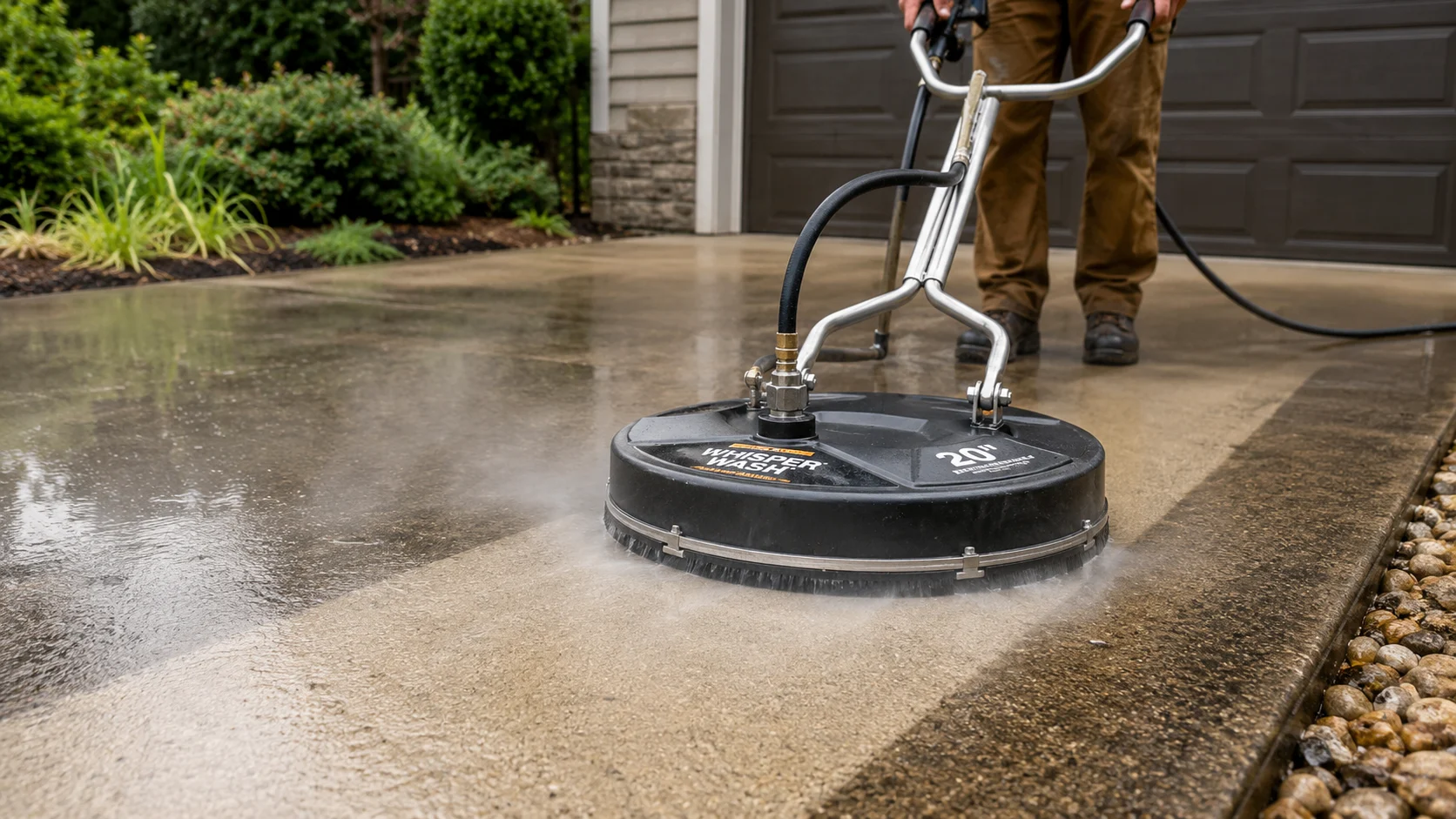
For homeowners across Tampa Bay this spring, the request is the same and the answer keeps changing: "Can I still get my driveway cleaned?" Under the Southwest Florida Water Management District's 2026 Modified Phase III "Extreme" water shortage order, which runs roughly April 3 through July 1, 2026 across Hillsborough, Pasco, Sarasota, and Manatee counties, the honest answer is yes — but not the way many people picture it. High-pressure washing done purely for appearance is curtailed under the order, while removing biological growth like mold, mildew, and algae is still permitted as legitimate maintenance. That distinction has pushed a quieter cleaning method into the spotlight: soft washing.
What soft washing actually is
Soft washing is not just "pressure washing turned down." It is a different approach to a different problem. Instead of relying on mechanical force to scour grime off concrete, soft washing combines low pressure — often no more than what a garden hose delivers — with a chemical treatment that does the real work. The typical mix is a diluted solution of sodium hypochlorite (the active ingredient in household bleach) plus surfactants that help the solution cling to the surface and penetrate growth. For oil and grease, a separate degreaser is used, since chlorine-based solutions do not lift petroleum stains.
The point of that chemistry is biological. Algae, mold, and mildew are living organisms with roots and spores that work their way into the pores of concrete. Soft washing kills them at the source. A proper application dwells on the surface long enough to neutralize the growth, then gets rinsed away. The driveway is not being blasted clean; it is being treated, and the discoloration fades over the following minutes and hours as the organisms die off. On heavily shaded or north-facing slabs, where growth tends to be worst, a second light pass is sometimes needed — but even then the total water used stays modest because the chemistry, not the volume, is doing the work.
How it differs from pressure washing
The difference matters during a drought for two reasons: water use and durability.
- Water use. High-pressure equipment pushes a continuous, high-volume stream to physically dislodge growth. Soft washing leans on chemistry instead of volume, so it uses far less water to cover the same square footage — a meaningful point when your water management district is asking everyone to conserve.
- Durability. A pressure washer can make a driveway look clean in an afternoon, but blasting algae off the surface scatters spores without killing them. Within a few weeks to a few months, the same green and black streaks return because the root colony was never addressed. Soft washing kills that colony, so the surface stays clean noticeably longer.
That second point is why the method is often described as treating the cause rather than the symptom. If you have ever wondered why a freshly cleaned driveway looks dirty again before the season is out, the answer is usually that the growth was removed cosmetically but not eliminated. The streaks you see are surface colonies, and a high-pressure stream simply relocates many of their spores to adjacent pores and joints, where they re-establish under the same warm, humid conditions that produced them in the first place. We cover the biology of that regrowth in more detail in our guide to removing mold from concrete at the root.
Why it is compliant under the restriction
The SWFWMD order does not ban cleaning concrete. It restricts aesthetic high-pressure washing — cleaning done strictly to improve appearance — while continuing to allow the removal of biological growth as a maintenance and safety activity. That is a defensible distinction in practice: algae and mildew on a driveway are not only unsightly, they make surfaces slick and can hold moisture against the concrete.
Soft washing sits squarely inside the permitted category. Its entire purpose is to kill and remove biological growth, which is the exact reason the order allows the work to continue. It also happens to use less water than the high-pressure method the order is trying to curb. So the compliant choice and the conservation-friendly choice are, conveniently, the same choice. We break down the specifics of what is and is not allowed in our overview of Florida's 2026 water restrictions and driveway cleaning.
None of this means soft washing is a free pass. The order's intent is conservation, and a contractor who runs an open hose for hours "soft washing" is not honoring the spirit of the rule. Done correctly, though, the method is both the lighter-touch option on water and the one most likely to keep a driveway clean through the dry season.
Technique still matters
Soft washing is forgiving on concrete but unforgiving when done carelessly. Dilution is the whole game: too weak and the growth survives; too strong and you risk lightening colored concrete, etching, or damaging the surrounding landscape. Sodium hypochlorite is hard on plants, so a careful operator pre-wets and rinses nearby grass, shrubs, and flower beds, and protects anything sensitive before and after the application.
This is one of the areas where a vetted professional earns their fee. Knowing the right concentration for the growth, the surface, and the weather — and knowing when a degreaser is needed instead of chlorine — is the difference between a driveway that stays clean for a year and one that is damaged or streaky. If you are comparing providers, look for someone who can explain their soft-wash chemistry plainly rather than someone who simply owns a pressure washer. You can start with vetted listings on our driveway cleaning directory, narrow to Florida providers, or jump straight to local pages for Sarasota and Wesley Chapel.
How it pairs with sealing
Soft washing also sets up the next step better than blasting does. Sealants bond to clean, sound concrete. A surface that still harbors living algae will trap that growth under the sealer, where it can keep working against the slab. Because soft washing kills the growth rather than just knocking it loose, it leaves a cleaner foundation for a sealer to adhere to.
A sealed driveway, in turn, resists the moisture and porosity that algae depend on, slowing the return of growth. The sequence — soft wash to kill and clean, then seal to protect — stretches the time between cleanings, which is exactly what you want when water rules limit how often you can clean in the first place. It also smooths out the cost over time: one well-executed soft wash and seal can outlast two or three rushed pressure-washing visits, so the math often favors the slower method even before the drought is factored in. For households also navigating community-association pressure during the order, our piece on the HOA driveway fine freeze is worth a read, since it explains how some associations are pausing appearance-based enforcement while the restriction is in effect.
The bottom line
The 2026 restriction has done something unusual: it has nudged homeowners toward the method that was arguably the better choice all along. Soft washing uses less water, targets the biological growth the order specifically permits removing, and keeps a driveway clean longer than a high-pressure rinse that scatters spores. Pair it with sealing and you get a maintenance cycle that is both compliant today and easier on your schedule and water bill going forward.
Honesty note: Water rules referenced here reflect SWFWMD orders as of April 2026 and can change — verify current restrictions with your water management district before scheduling.
Regulatory details in this article reflect rules as of the dates noted and can change. Always verify current restrictions with your water management district and your HOA’s governing documents before scheduling work.
Common questions
Frequently asked
What is soft washing?+
Soft washing combines low water pressure with a chemical treatment — usually diluted sodium hypochlorite and surfactants, plus a degreaser for oil. Instead of blasting growth off the surface, it kills algae, mold, and mildew at the root so the discoloration fades and stays gone longer than a high-pressure rinse.
Is soft washing allowed during the 2026 water restriction?+
Generally yes. The SWFWMD Modified Phase III order curtails high-pressure aesthetic washing but still permits removing biological growth like algae and mildew as maintenance. Soft washing exists to do exactly that, and it uses less water than blasting. Always verify current rules with your water management district before booking.
Does soft washing last longer than pressure washing?+
Usually, yes. Pressure washing removes growth cosmetically but scatters living spores, so the green and black streaks often return within weeks or months. Soft washing kills the organism at its roots, so a treated driveway stays clean noticeably longer — especially when followed by sealing.
Are there any downsides to soft washing?+
Technique matters. The chlorine-based solution must be diluted correctly to avoid lightening colored concrete or harming nearby plants, which should be pre-wet and rinsed. A vetted professional who understands soft-wash chemistry and knows when a degreaser is needed is worth the cost over a generic pressure-washing service.
Dana Whitfield · Industry & Regulatory Editor
Dana Whitfield covers the rules, regulations, and industry shifts that affect how homeowners maintain their property. With a background in local-government and utilities reporting, she tracks water-management district orders, HOA enforcement changes, and drought policy across the Sun Belt — then explains what they actually mean for a homeowner standing in their driveway. For Concrete Patio Cleaning she writes the News desk, prioritizing accuracy and plain explanation over hype, and always pointing readers to verify current rules with their own water district. Her focus is helping people stay compliant and make informed decisions as the regulatory picture changes.
Background: local-government and utilities reporting; covers Sun Belt water & HOA regulation.