News · May 12, 2026
Can You Pressure Wash a Driveway in California? 2026

Dana Whitfield — Industry & Regulatory Editor, covering water policy & HOA rules.
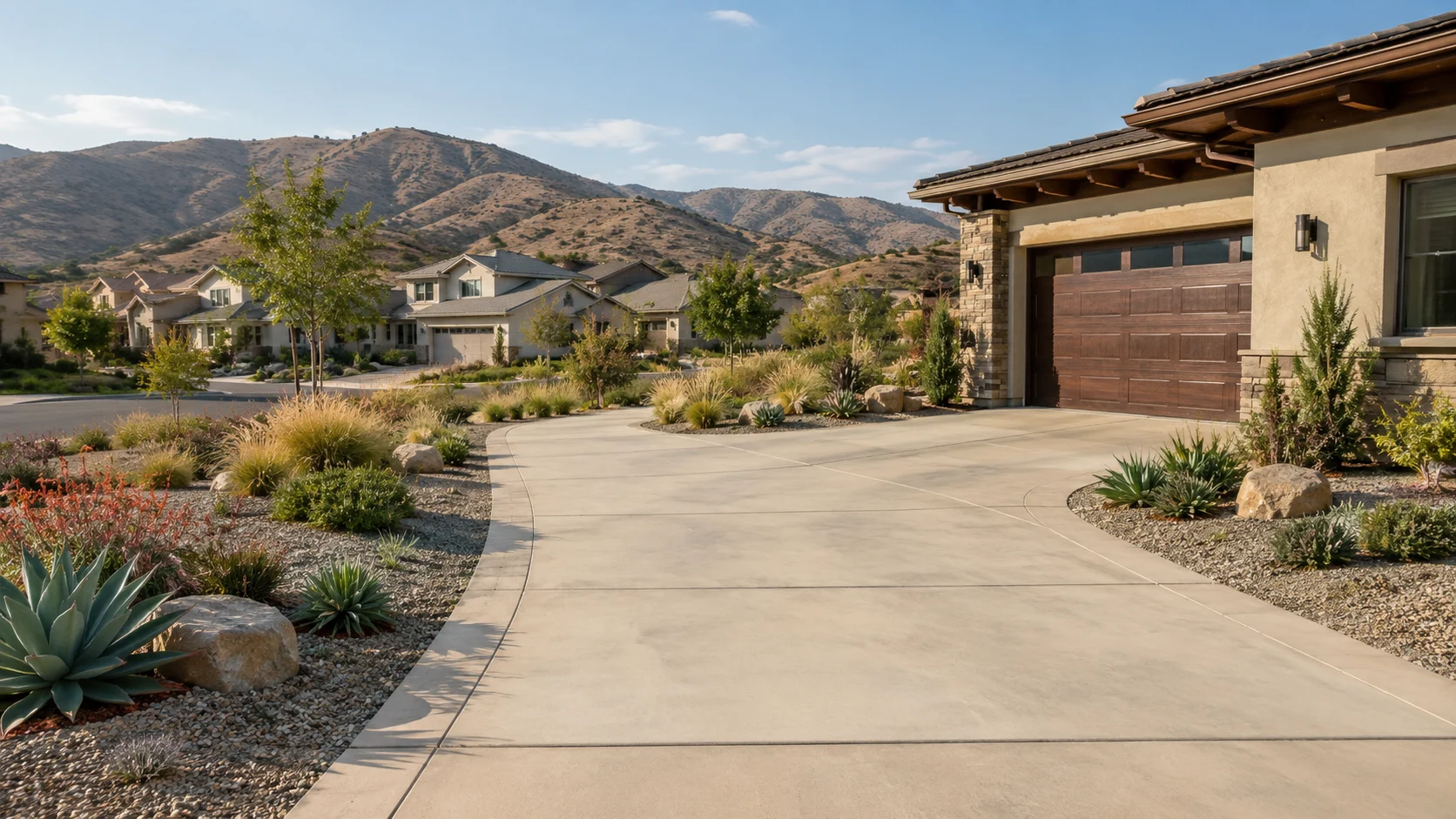
If you live in California and want to clean your driveway, the rule you need to know is not seasonal and does not wait for a drought. The State Water Resources Control Board maintains a set of permanent, year-round prohibitions on wasteful water use, and one of them speaks directly to hardscape. Put simply, you cannot hose down a driveway, sidewalk or other hardscape with potable water - in a wet year or a dry one. That single fact changes how driveway cleaning works in this state, and it is the reason low-water professional methods have become the norm rather than the exception.
This article explains the permanent baseline, the extra drought stages layered on top of it in 2026, how the rules treat removing living growth differently from wasteful aesthetic hosing, and the protections California gives homeowners against HOA pressure. We publish as an independent directory, not a contractor, so the aim is to help you stay compliant and make an informed decision. For the national picture, see our hub on whether you can pressure wash a driveway under water restrictions.
California's permanent statewide baseline
The State Water Resources Control Board's permanent prohibitions on wasteful water use apply every year, regardless of drought conditions. The ones that matter most for driveways and outdoor cleaning include:
- No hosing down hardscape. Applying potable water to driveways, sidewalks and other hardscape - washing them down with a hose - is prohibited.
- No runoff. Outdoor watering and washing may not produce runoff that flows onto adjacent sidewalks, streets, or other hardscape and into the gutter.
- Shut-off nozzle required. Hoses used to wash anything outdoors must have a shut-off nozzle so water is not left running.
- Irrigation and rain. Outdoor irrigation with sprinklers is prohibited within 48 hours after measurable rainfall.
- Fountains must recirculate. Decorative fountains and water features must use recirculated water.
The hardscape rule is the key one for driveway cleaning. Because it is permanent rather than a temporary drought measure, the practical effect is that a Californian essentially can never simply hose down a driveway with potable water to clean it. That is true this year, it was true in wetter years, and it will be true next year. It is the baseline beneath every local rule.
2026 drought context layered on top
On top of the permanent baseline, local and regional agencies set drought stages that can add further limits in dry years. The 2026 picture is mixed but leans dry. The Sierra Nevada snowpack came in at roughly 62% of normal, and the State Water Project announced an allocation of about 30% of requested supplies. In March 2026, the Metropolitan Water District of Southern California (MWD) was at Level 1 of its supply framework, and most Southern California and Central Valley agencies were operating at Stage 1 to Stage 2 of their own drought response plans.
What that means for a homeowner is that the permanent no-hosing rule already governs your driveway, and depending on where you live, a Stage 1 or Stage 2 local declaration may add restrictions on watering days, car washing, or other outdoor uses. Drought stages move up and down with conditions; the hardscape baseline does not. So even in a year that conditions ease, the rule against hosing down a driveway with potable water stays in place.
Biological growth vs. wasteful hosing: the nuance
The permanent prohibition targets wasteful use - running potable water over a driveway to rinse off dirt or refresh its look. That is the behavior the rule is designed to stop.
Removing living biological growth - algae, mold, mildew - and preparing a surface before sealing or coating are generally treated differently from purely aesthetic hosing. Algae and mildew on concrete create a real slip hazard and can degrade the surface over time, so addressing them is a maintenance and safety matter rather than a cosmetic indulgence. The same logic applies to cleaning a driveway as a necessary step before sealing it.
This is a nuance, not a blanket exemption, and the precise treatment can vary by local agency. The safest reading is that the method and the purpose both matter: a low-water approach aimed at genuine growth removal or surface prep is on far firmer footing than open-hose rinsing for appearance. Confirm the specifics with your local water agency before you book work, because no statewide rule grants a clean exemption for cleaning - only the distinction between wasteful and maintenance use.
Why soft washing and low-water methods are the norm
Because the hardscape rule is permanent, California has effectively pushed driveway cleaning toward methods that do not rely on hosing surfaces down. Soft washing - a low-pressure approach that uses cleaning solutions to break down and kill organic growth, then a controlled rinse - fits this reality far better than open high-volume blasting.
Two features make it well suited to the California rules:
- Lower water use. Soft washing applies treatment at low pressure and uses substantially less water than running a high-pressure system, or a hose, over the same area.
- Targets living growth. The method is built to remove algae, mold and mildew - the maintenance category that is treated more favorably than wasteful aesthetic rinsing.
Professional low-water cleaning also makes it easier to avoid the runoff prohibition, since controlling where water goes is part of the process rather than an afterthought. None of this is a loophole: the approach qualifies when the purpose is real growth removal or surface prep, not when cosmetic hosing is simply rebranded. We cover the method in detail in our piece on soft washing and water-restriction-compliant driveway cleaning, and you can compare guidance and find providers through our driveway cleaning directory.
The HOA angle
Many California homeowners feel caught between a water rule that limits outdoor use and a homeowners association that wants surfaces and landscaping kept uniformly tidy. State law addresses part of this tension. Under California Water Code section 10631.5, an HOA cannot fine a homeowner for having a brown or dormant lawn that is the result of complying with drought or water-conservation measures. In other words, an association may not penalize you for letting grass go dormant to save water during a declared shortage.
That protection is about lawns rather than driveways specifically, but the underlying principle is useful: state water rules and conservation measures take priority over an association's appearance standards. An HOA cannot lawfully require you to violate a water restriction to satisfy its aesthetic preferences, and where it pushes you to hose down hardscape for looks, the permanent state prohibition still governs. If your association presses the point, asking in writing how it is reconciling its standards with state water rules can save trouble later.
What a homeowner can and can't do
- Not allowed: Hosing down a driveway, sidewalk or hardscape with potable water to clean or refresh it - this is prohibited every year, drought or not.
- Not allowed: Letting wash water run off onto sidewalks, streets or the gutter.
- Generally treated differently: Removing algae, mold and mildew as maintenance, and cleaning to prep a surface before sealing - confirm locally.
- Required: A shut-off nozzle on any hose used outdoors.
- Protected: A dormant or brown lawn kept that way for drought compliance cannot be fined by an HOA under Water Code 10631.5.
Honesty note
Rules are current as of May 2026; California's baseline is permanent but local drought stages change - confirm with your water agency (or the State Water Board) before washing. Enforcement and the exact handling of growth removal and surface prep can vary by district and city, so when in doubt, check with your local water provider before any outdoor cleaning work.
Regulatory details in this article reflect rules as of the dates noted and can change. Always verify current restrictions with your water management district and your HOA’s governing documents before scheduling work.
Common questions
Frequently asked
Can I pressure wash my driveway in California right now?+
You cannot simply hose down a driveway with potable water - that is prohibited year-round, not just during drought, under the State Water Resources Control Board's permanent rules. Low-water methods like soft washing that target algae and mold, avoid runoff, and use a shut-off nozzle are the compliant norm. Confirm specifics with your local water agency first.
Why can't I hose off my driveway even in a wet year?+
Because the no-hosing-hardscape rule is a permanent statewide prohibition, not a temporary drought measure. The State Water Board's permanent prohibitions apply every year regardless of conditions. Drought stages can add further limits in dry years, but the baseline ban on rinsing driveways with potable water stays in place even when reservoirs are full.
Is removing algae or mold treated the same as a wasteful wash?+
Generally no. The permanent rule targets wasteful aesthetic hosing. Removing living growth like algae, mold and mildew, or cleaning to prep a surface before sealing, is usually treated as maintenance rather than waste, especially with low-water methods that control runoff. This is a nuance, not a blanket exemption, so confirm the specifics with your local water agency.
Can my HOA fine me over my driveway or lawn during a drought?+
Under California Water Code section 10631.5, an HOA cannot fine you for a brown or dormant lawn resulting from drought-compliant water conservation. More broadly, state water rules take priority over an association's appearance standards, so an HOA cannot lawfully require you to violate a water restriction to meet its preferences. Get its position in writing if pressed.
Dana Whitfield · Industry & Regulatory Editor
Dana Whitfield covers the rules, regulations, and industry shifts that affect how homeowners maintain their property. With a background in local-government and utilities reporting, she tracks water-management district orders, HOA enforcement changes, and drought policy across the Sun Belt — then explains what they actually mean for a homeowner standing in their driveway. For Concrete Patio Cleaning she writes the News desk, prioritizing accuracy and plain explanation over hype, and always pointing readers to verify current rules with their own water district. Her focus is helping people stay compliant and make informed decisions as the regulatory picture changes.
Background: local-government and utilities reporting; covers Sun Belt water & HOA regulation.