News · May 25, 2026
Soft Washing: Clean Your Driveway Legally in 2026

Dana Whitfield — Industry & Regulatory Editor, covering water policy & HOA rules.
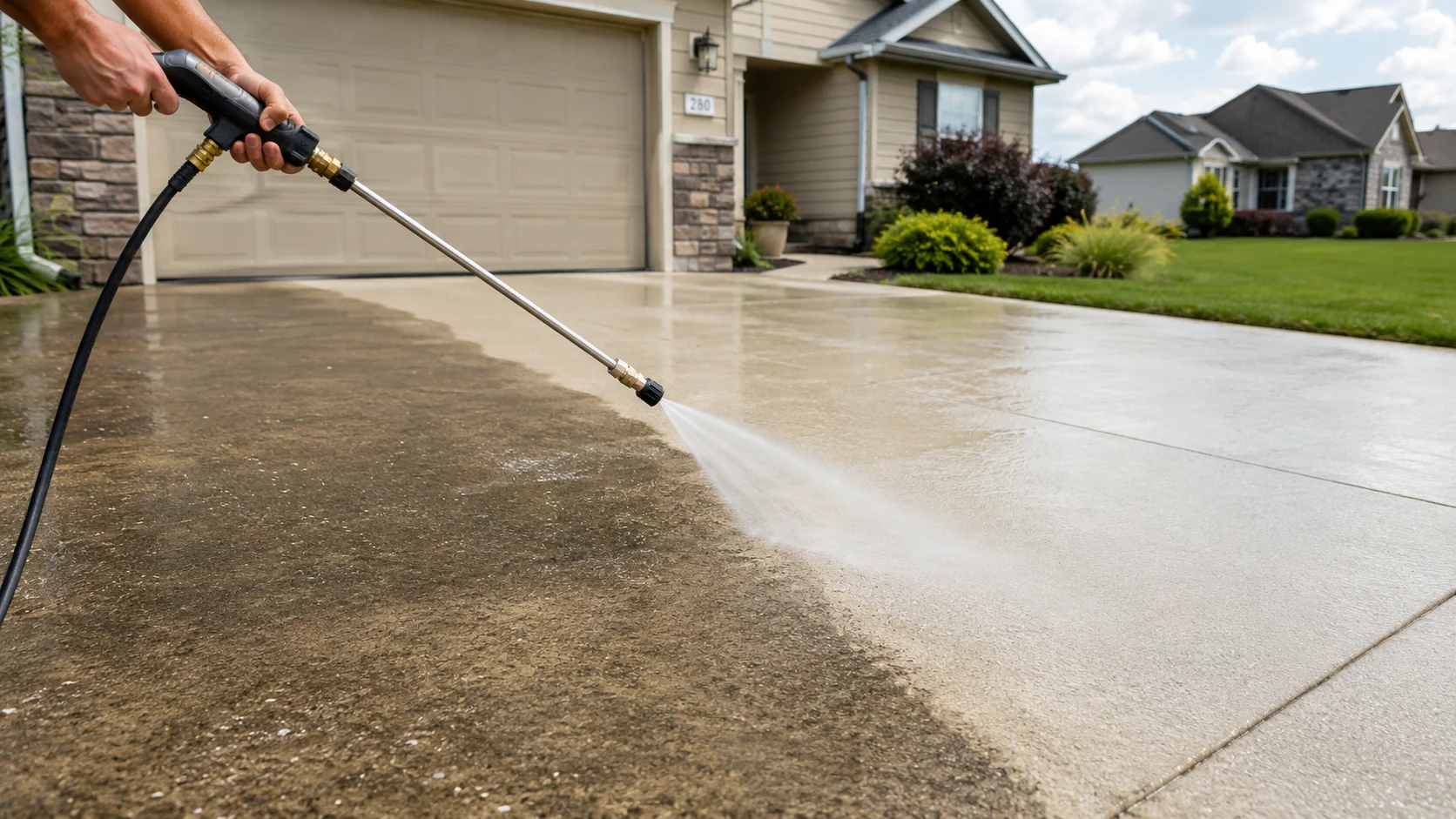
If you have read that you cannot pressure wash your driveway during a water restriction, you have read something that is half right. Most drought ordinances do restrict the high-volume, potable-water hosing of hardscape - but the thing they restrict is the wasteful, purely cosmetic version of it. They almost never ban the removal of biological growth or the cleaning needed to keep a surface safe and maintained. That gap is where soft washing lives, and it is the practical answer to the question most homeowners are actually asking: how do I get my driveway clean without breaking the rules?
This is the companion piece to our state-by-state coverage. It explains why aesthetic hosing gets restricted, what is usually still allowed, what soft washing is and how it differs from pressure washing, why it uses less water and lasts longer, and how to stay on the right side of your local rules. We publish as an independent directory, not a contractor, so the goal here is to help you make an informed, compliant decision. For the national overview, start with our hub on whether you can pressure wash a driveway under water restrictions.
Why aesthetic hosing is the thing that gets restricted
Drought and water-conservation rules are written to stop waste, not to stop maintenance. The behavior they target is running a hose or a high-pressure machine over a driveway, sidewalk or patio mainly to refresh how it looks - water poured onto a surface and straight into the gutter, accomplishing little beyond appearance. That is the textbook example of wasteful outdoor use, and it is why so many ordinances single out "hosing down hardscape" or "washing down paved surfaces" by name.
The logic is consistent across jurisdictions even though the wording differs. A large volume of treated, drinkable water used purely for looks is hard to justify when supplies are tight. So the restriction lands on the aesthetic rinse, and the high-pressure machine - which can move a lot of water quickly - tends to get caught up in the same prohibition when its purpose is cosmetic.
What is usually still allowed
Because the rules target waste rather than cleaning itself, several categories of work are commonly left permitted even when aesthetic hosing is banned. The exact language varies, but the recurring exemptions are:
- Removing biological growth. Algae, mold and mildew on concrete are a slip hazard and can degrade the surface over time. Addressing them is widely treated as maintenance and safety, not cosmetics.
- Health and safety cleaning. Removing spills, slip hazards or contamination is generally allowed because it protects people, not just appearance.
- Surface preparation. Cleaning a driveway as a necessary step before sealing, painting or coating is usually permitted, since the cleaning serves a functional repair rather than a quick refresh.
None of these is a universal, written-in-stone exemption - the precise treatment depends on your local water provider's rules. But the pattern is reliable enough to plan around: the purpose of the work and the method you use both matter, and genuine growth removal or surface prep stands on far firmer ground than an open-hose rinse for looks.
What soft washing is, and how it differs from pressure washing
Soft washing is a low-pressure cleaning method that does the work with chemistry rather than force. Instead of blasting a surface with high-pressure water, the technician applies a cleaning solution that breaks down and kills organic growth, lets it dwell, then rinses at low pressure. The typical solution is a diluted sodium hypochlorite (the active ingredient in household bleach) combined with surfactants that help it cling and penetrate; for oil and grease stains, a degreaser is used instead or in addition.
The contrast with pressure washing is straightforward:
Pressure washing
- Relies on high-pressure water - often 2,000 to 4,000 PSI - to physically scour the surface.
- Moves a large volume of water through the machine to do that scouring.
- Removes what is on the surface but does not necessarily kill the organism producing it.
Soft washing
- Uses low pressure, closer to a strong garden-hose flow, so the chemistry does the cleaning.
- Uses far less water overall because it is not relying on volume and force.
- Kills algae, mold and mildew at the root, not just the visible film on top.
That last point is the difference that matters most for results. A pressure washer can make a surface look clean while leaving living spores behind; soft washing is designed to treat the growth itself.
Why it uses less water - and lasts longer
The water savings come directly from the method. A high-pressure system has to push a continuous, heavy stream to scour a surface mechanically. Soft washing applies a treatment at low pressure and rinses lightly, so the same area is cleaned with a fraction of the flow. In a place where the aesthetic hosing of hardscape is restricted precisely because of how much water it uses, that lower footprint is exactly what makes the method workable.
The durability advantage follows from the same chemistry. Because soft washing kills the algae, mold and mildew at the source rather than only stripping the visible layer, the growth takes longer to return. A surface that has been treated rather than merely blasted tends to stay clean for a longer stretch, which also means fewer cleanings - and less water - over the life of the driveway. Less frequent cleaning is itself a form of conservation.
How to stay compliant
Soft washing is a strong fit for water-restriction conditions, but it is not an automatic free pass. Staying compliant comes down to a few habits:
- Tie the work to a permitted purpose. Frame and document the job as growth removal, safety, or surface prep for sealing - not as a cosmetic refresh.
- Use proper dilution and technique. The treatment only works safely and effectively at the right concentration; too strong risks damage, too weak fails to kill growth.
- Protect plants and control runoff. Pre-wet and rinse nearby landscaping, and avoid letting wash water run off onto sidewalks, streets or the gutter, which many rules prohibit separately.
- Use a shut-off nozzle. Where rules require it, any hose used outdoors should have one so water is not left running.
- Confirm your local rules first. Exemptions and definitions vary by jurisdiction, so check what your water provider actually allows before booking.
For state-specific detail, see our coverage for California, Arizona, Texas, Colorado and Georgia.
When to hire a pro
You can soft wash a driveway yourself, but the chemistry is the part that goes wrong most often. Getting the dilution right, choosing the correct treatment for algae versus oil, protecting landscaping, and keeping runoff under control all take some care. A diluted bleach solution that is too strong can damage plants, discolor surfaces or harm adjacent materials; too weak and it simply will not kill the growth, so it comes back fast.
Hiring a professional makes sense when the growth is heavy or recurring, when there are sensitive plants close to the work area, when you want the results documented for an HOA or for compliance, or when you simply do not want to handle cleaning chemicals. A reputable provider should also know your local water rules and be able to keep the work inside them. You can compare guidance and find providers through our driveway cleaning directory, and get a sense of pricing in our cost guide before you book.
Honesty note
Rules are current as of May 2026 and exemptions vary by jurisdiction - confirm what your local water provider allows before any exterior cleaning. The distinction between wasteful aesthetic hosing and permitted maintenance is consistent across many ordinances, but the exact definitions, enforcement and any required nozzles or runoff limits are set locally, so when in doubt, ask your water agency before the work begins.
Regulatory details in this article reflect rules as of the dates noted and can change. Always verify current restrictions with your water management district and your HOA’s governing documents before scheduling work.
Common questions
Frequently asked
Is soft washing allowed during water restrictions?+
Often, yes. Most drought rules restrict the wasteful, high-volume hosing of hardscape for appearance, but commonly permit removing biological growth like algae and mold, and cleaning to prep a surface for sealing. Soft washing fits those permitted purposes and uses far less water. It is not a universal exemption, though, so confirm what your local water provider allows first.
Does soft washing use less water than pressure washing?+
Yes, substantially. A pressure washer relies on a heavy, continuous high-pressure stream to scour a surface mechanically. Soft washing applies a low-pressure chemical treatment and rinses lightly, so the cleaning is done by chemistry rather than water volume. The same area is cleaned with a fraction of the flow, which is exactly why the method suits water-restriction conditions.
What chemicals does soft washing use on a driveway?+
The typical solution is diluted sodium hypochlorite - the active ingredient in household bleach - combined with surfactants that help it cling to and penetrate the growth. For oil and grease stains, a degreaser is used instead or in addition. Proper dilution matters: too strong can damage plants and surfaces, too weak fails to kill algae and mold at the source.
Does soft washing keep a driveway clean longer?+
Generally yes. Because soft washing kills algae, mold and mildew at the root rather than only stripping the visible film, the growth takes longer to return than after a pressure wash that leaves living spores behind. A longer interval between cleanings also means less water used over the life of the driveway, which is a form of conservation in itself.
Dana Whitfield · Industry & Regulatory Editor
Dana Whitfield covers the rules, regulations, and industry shifts that affect how homeowners maintain their property. With a background in local-government and utilities reporting, she tracks water-management district orders, HOA enforcement changes, and drought policy across the Sun Belt — then explains what they actually mean for a homeowner standing in their driveway. For Concrete Patio Cleaning she writes the News desk, prioritizing accuracy and plain explanation over hype, and always pointing readers to verify current rules with their own water district. Her focus is helping people stay compliant and make informed decisions as the regulatory picture changes.
Background: local-government and utilities reporting; covers Sun Belt water & HOA regulation.