News · May 22, 2026
Can You Pressure Wash a Driveway in Georgia? 2026

Dana Whitfield — Industry & Regulatory Editor, covering water policy & HOA rules.
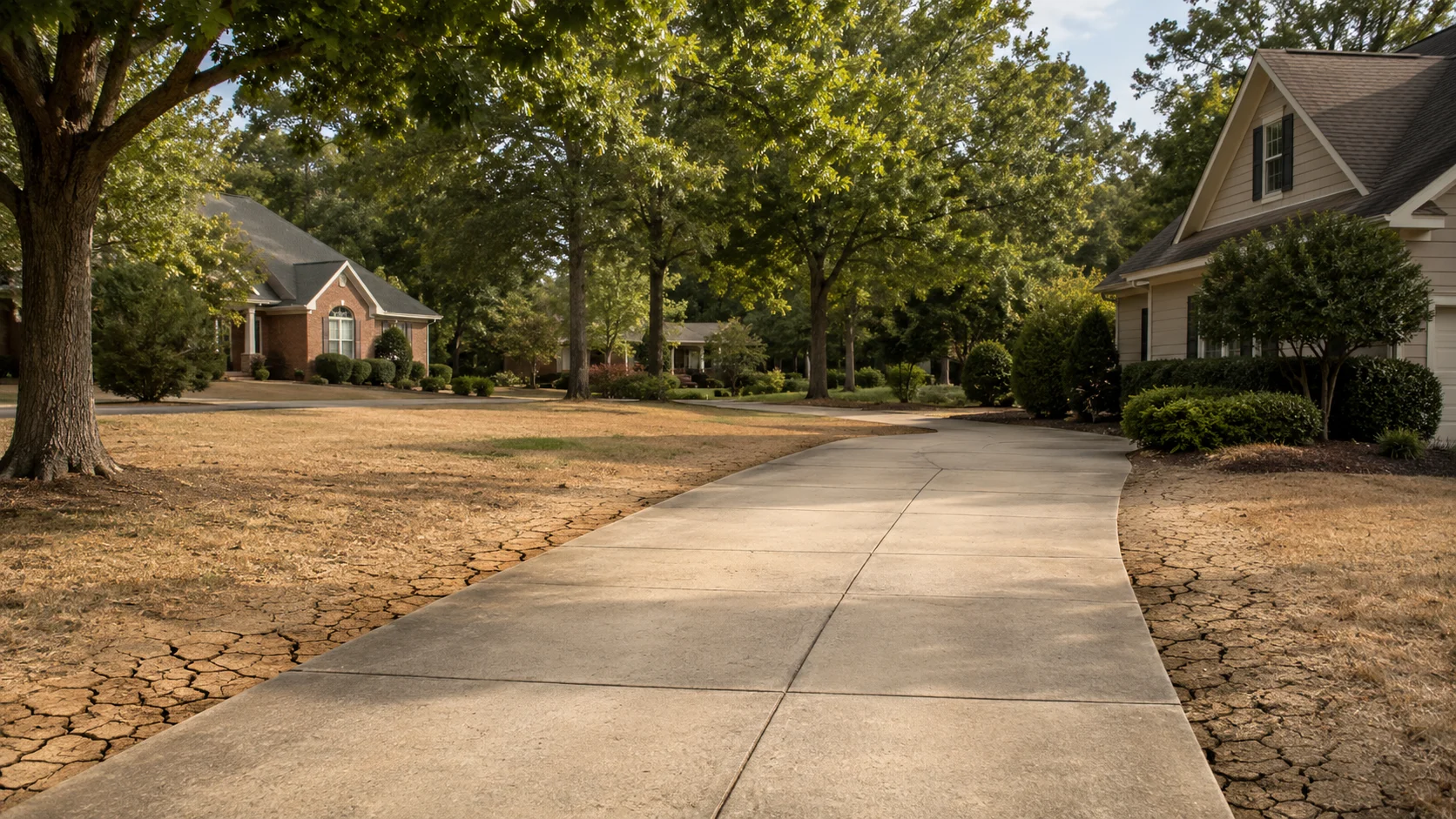
If you live in Georgia and want to clean your driveway in 2026, the short answer is that you probably still can - but the rules are tightening, and they can change quickly. The Georgia Environmental Protection Division (EPD) manages a tiered drought response system, and the tier the state is in determines what outdoor water use is allowed. As of this writing the state sits at the lower end of that system, which means most driveway cleaning is still permitted. But the drought picture this spring was severe enough that homeowners should understand where the limits are before they hit a higher tier.
We publish as an independent directory, not a contractor, so the goal here is to help you stay compliant and make an informed decision. For the broader national picture, see our hub on whether you can pressure wash a driveway under water restrictions.
The 2026 drought picture in Georgia
The backdrop matters because it drives the rules. By late March 2026, roughly 96% of Georgia was under some level of drought. The Southeast as a region recorded its driest recharge season since 1895 - the recharge season being the cooler, wetter months when rainfall normally refills aquifers and reservoirs before summer demand spikes. When that refill does not happen, agencies move more aggressively into conservation measures heading into the dry season.
In response, the Georgia EPD declared a statewide Drought Response Level 1 on April 27, 2026. Level 1 is the first formal step in the state's drought framework. Some local systems acted on their own ahead of the statewide call: Valdosta, for example, moved to mandatory one-day-per-week outdoor watering on April 15, 2026, before the statewide Level 1 declaration.
What Level 1 means for your driveway
At Drought Response Level 1, the emphasis is largely on awareness and voluntary conservation, with some outdoor watering schedules in place. Many outdoor activities are still allowed, and pressure washing a driveway is generally not prohibited at this level. In other words, if you want to clean your driveway right now under a statewide Level 1, you most likely can - subject to your own city's specific rules.
That last point is important. Local water systems can and do impose stricter measures than the statewide level. Valdosta's earlier move to one-day-per-week watering is a good example of a city acting ahead of and beyond the state baseline. So Level 1 is the floor, not the ceiling, and the only way to be sure is to check your specific city or county.
What changes at Level 2
The picture shifts sharply if the EPD escalates to Drought Response Level 2. At Level 2, the restrictions reach directly into hardscape cleaning. Specifically:
- Pressure washing of driveways, sidewalks, decks and exterior walls is prohibited.
- Outdoor washing of non-commercial vehicles - washing your own car at home - is banned.
This is the threshold homeowners should watch. Because the state entered Level 1 in late April after an exceptionally dry recharge season, the conditions that would justify a move to Level 2 are not hypothetical. If summer rainfall disappoints, an escalation is plausible, and at that point routine aesthetic pressure washing of a driveway would no longer be allowed.
Aesthetic washing vs. growth removal and surface prep
Even where pressure washing is restricted, not all cleaning is treated the same. Drought rules are aimed primarily at wasteful, purely aesthetic water use - running large volumes of water over a surface mainly to refresh its appearance.
Removing biological growth such as algae, mold and mildew, and cleaning a surface to prepare it before sealing or coating, are generally treated differently from wasteful aesthetic washing. This matters a great deal in Georgia, because the state's high humidity drives heavy algae and mildew growth on concrete, pavers and other hardscape. Algae on a driveway or walkway is not just unsightly; it creates a real slip hazard and can degrade the surface over time, so addressing it is a maintenance and safety matter rather than a cosmetic indulgence.
This is a nuance, not a blanket exemption. The exact handling varies by local system and by drought level, so the safest course is to confirm with your water provider whether targeted growth removal or surface prep is treated differently from a general appearance wash where you live.
Why soft washing fits Georgia's situation
Because Georgia's humidity produces so much organic growth and because the state can move into tiers that limit high-volume washing, low-water methods are well suited to the conditions. Soft washing - a low-pressure approach that uses cleaning solutions to break down and kill organic growth, followed by a controlled rinse - uses far less water than running a high-pressure system or an open hose over the same area.
Two features make it a good match here:
- Lower water use. Soft washing applies treatment at low pressure and uses substantially less water than high-pressure blasting, which keeps it more workable as restrictions tighten.
- Targets living growth. The method is built to remove algae, mold and mildew - the maintenance category more likely to be treated favorably than wasteful aesthetic rinsing.
None of this is a loophole. The approach holds up when the purpose is genuine growth removal or surface prep, not when an appearance wash is simply rebranded. We cover the method in detail in our piece on soft washing and water-restriction-compliant driveway cleaning, and you can compare guidance and find providers through our driveway cleaning directory. Whether soft washing is permitted at any given drought level still depends on local rules, so confirm before booking.
Enforcement and penalties
How violations are handled depends on your city. In Atlanta, a first offense for violating outdoor water-use rules is typically met with a written warning rather than an immediate fine. That is a common approach for first-time, low-level violations, with escalating consequences for repeat offenses. We are not going to invent specific fine amounts here; penalty schedules vary by jurisdiction and change over time, so check your own city's ordinance for the exact figures if you want them.
What a homeowner can and can't do in 2026
- At statewide Level 1 (current): Pressure washing a driveway is generally still allowed, subject to your city's own rules. Watering schedules may apply.
- At Level 2 (if escalated): Pressure washing driveways, sidewalks, decks and exterior walls is prohibited, and washing your own car at home is banned.
- Local rules can be stricter: Valdosta moved to one-day-per-week outdoor watering on April 15, 2026, ahead of the statewide declaration.
- Generally treated differently: Removing algae, mold and mildew, and cleaning to prep a surface before sealing - confirm locally.
- First-offense handling: Atlanta typically issues a written warning for a first violation.
Honesty note
Rules are current as of May 2026; Georgia EPD drought levels change - confirm the current level and your city's rules (e.g., Atlanta, Valdosta) before washing. Enforcement and the exact handling of growth removal and surface prep can vary by city and county, so when in doubt, check with your local water provider before any outdoor cleaning work.
Regulatory details in this article reflect rules as of the dates noted and can change. Always verify current restrictions with your water management district and your HOA’s governing documents before scheduling work.
Common questions
Frequently asked
Can I pressure wash my driveway in Georgia right now?+
Most likely yes. As of the statewide Drought Response Level 1 declared April 27, 2026, pressure washing a driveway is generally not prohibited. However, local systems can be stricter than the state baseline, so check your own city's rules first. If the EPD escalates to Level 2, pressure washing driveways becomes prohibited statewide.
What happens to driveway washing at Drought Response Level 2?+
At Level 2, pressure washing of driveways, sidewalks, decks and exterior walls is prohibited, and outdoor washing of non-commercial vehicles is banned. Because Georgia entered Level 1 in late April 2026 after an exceptionally dry recharge season, a move to Level 2 is plausible if summer rainfall disappoints, so watch your current drought level closely.
Does Georgia treat algae removal differently from a regular wash?+
Generally yes. Drought rules target wasteful aesthetic water use. Removing living growth like algae, mold and mildew, or cleaning to prep a surface before sealing, is usually treated more favorably as maintenance. Georgia's humidity drives heavy algae growth on hardscape, which is also a slip hazard. This is a nuance, not a blanket exemption, so confirm specifics with your local water provider.
What is the penalty for breaking water rules in Georgia?+
It depends on your city. In Atlanta, a first offense is typically met with a written warning rather than an immediate fine, with escalating consequences for repeat violations. Penalty schedules vary by jurisdiction and change over time, so check your own city's ordinance for exact figures before relying on any specific amount.
Dana Whitfield · Industry & Regulatory Editor
Dana Whitfield covers the rules, regulations, and industry shifts that affect how homeowners maintain their property. With a background in local-government and utilities reporting, she tracks water-management district orders, HOA enforcement changes, and drought policy across the Sun Belt — then explains what they actually mean for a homeowner standing in their driveway. For Concrete Patio Cleaning she writes the News desk, prioritizing accuracy and plain explanation over hype, and always pointing readers to verify current rules with their own water district. Her focus is helping people stay compliant and make informed decisions as the regulatory picture changes.
Background: local-government and utilities reporting; covers Sun Belt water & HOA regulation.