News · May 18, 2026
Can You Pressure Wash a Driveway in Colorado? 2026

Dana Whitfield — Industry & Regulatory Editor, covering water policy & HOA rules.
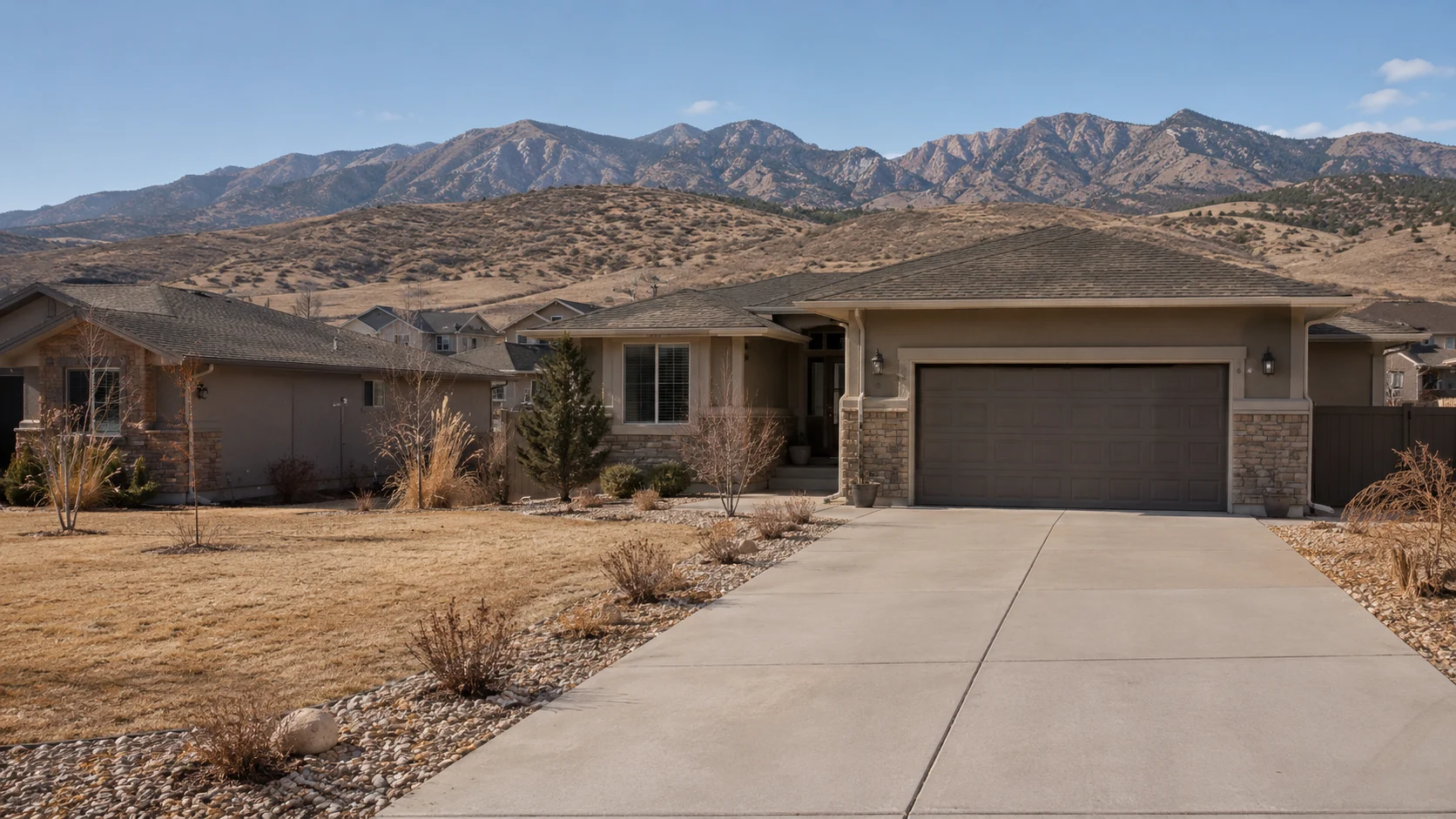
If you live in Denver, the Front Range, or a Colorado mountain community, the short answer in 2026 is that pressure washing a driveway is restricted in much of the state, and in some districts it is off the table entirely. This is not a minor administrative tweak. Colorado is responding to severe drought conditions, and one of the first discretionary uses to come under formal restriction is spraying potable water on hard outdoor surfaces like driveways, patios, and sidewalks.
This guide explains what the rules say, where they apply, and how Colorado homeowners can keep a driveway clean without violating their water provider's drought rules. For the broader national picture, see our hub on pressure washing under water restrictions.
Why Colorado's rules tightened in 2026
The trigger is drought. Denver Water declared a Stage 1 drought, its first such declaration since 2013, and asked customers for a 20 percent reduction in water use. Driving that declaration was a snowpack that has been cited as the worst on record for the season, which directly affects how much water flows into the reservoirs that supply the region through the warmer months.
When snowpack collapses, the water utilities that depend on snowmelt have to plan for shortage well before summer arrives. For households, the practical result is that low-priority, discretionary uses are restricted first. Washing a slab of concrete with drinking water purely for appearance is, from a regulator's standpoint, one of the easiest uses to give up when supply is constrained.
What Denver Water's Stage 1 rules say
Denver Water's Stage 1 drought restrictions reach beyond lawn watering. They specifically restrict the power washing of a long list of surfaces and structures, including:
- Sidewalks, driveways, and patios — the hard outdoor surfaces most people mean when they talk about pressure washing.
- Houses, fences, and decks — exterior structures often cleaned with a pressure or power washer.
- Windows — included in the restricted list alongside the surfaces above.
The restriction is not absolute in every case. Denver Water's rules include exceptions for health and safety, which is an important nuance discussed below. But the default posture under Stage 1 is that routine, aesthetic power washing of these surfaces with potable water is restricted.
Drought pricing
Denver Water also added drought pricing, meaning higher rates designed to encourage conservation. Even where a given activity is not flatly prohibited, the cost of water itself is being used as a lever to push households toward using less. For a high-volume activity like traditional pressure washing, that pricing change is one more reason to think carefully about how much water a job actually consumes.
Mountain towns and other districts differ sharply
Denver Water serves a large population, but Colorado is a patchwork of independent water providers, and many have declared their own restrictions at different severity levels. The variation is wide:
- Aspen has moved to a Stage 3 restriction.
- Woodland Park has declared a Level 2 restriction.
- Golden has declared a Stage 1 restriction.
- Some mountain districts have banned outdoor water use entirely, which would rule out hosing or pressure washing a driveway outright.
This matters enormously. The stage and the specific rules in your community may be far stricter than Denver's, and the labels are not interchangeable: a "Stage 3" in one town is not defined the same way as a "Stage 1" in another. Do not assume a Denver rule applies where you live. Check your own provider.
What dirties a Colorado driveway
Colorado's climate shapes the cleaning problem. The dry Front Range and high country see plenty of dust and grit, while shaded, north-facing, and consistently damp areas can still grow algae and mildew. Winter brings its own residue: de-icing materials, sand, and the gray film that road treatment leaves behind. Understanding what is actually on your driveway helps you pick a method that uses the least water for the job, which is the whole point under current rules.
The nuance: not all cleaning is treated the same
Drought rules are generally aimed at wasteful, aesthetic hosing — spraying down a slab with a flowing stream of drinking water just to refresh its appearance. Several other situations are often treated differently, though you must confirm this with your local provider:
- Health and safety exceptions. Denver Water's rules explicitly carve out exceptions for health and safety. Cleaning that addresses a genuine hazard is not the same, in regulatory terms, as cosmetic washing.
- Biological-growth removal. Where algae, mold, or mildew create a slip hazard or a structural concern rather than a purely cosmetic one, removal is frequently viewed differently from routine washing.
- Surface preparation. Prep work tied to sealing or coating the concrete is a functional maintenance task, not pure aesthetics, and may be evaluated on different terms.
- Low-water methods. Soft washing uses far less water than traditional high-volume pressure washing because it relies on cleaning solutions and low pressure rather than brute-force flow. Lower consumption can make a method more defensible under drought rules.
None of these are blanket exemptions, and the burden is on you to confirm before you start. When in doubt, call your water provider and ask about your specific situation and current stage.
How to clean a driveway compliantly in Colorado
If your provider's stage restricts or bans washing hard surfaces with potable water, traditional pressure washing is not your path. Consider these directions instead, all subject to local confirmation:
- Dry methods first. Sweeping and using a leaf blower to clear dust, sand, and debris uses no water at all and handles much of Colorado's everyday grime, including winter sand residue.
- Soft washing. A low-pressure, solution-based approach uses dramatically less water and is well suited to algae, mildew, and films. Our guide to water-restriction-compliant soft washing walks through how it works.
- Spot treatment. Targeting specific stains with appropriate cleaners, rather than flooding the entire slab, keeps water use minimal.
- Professional judgment. A reputable local pro should know your provider's current stage and can advise on compliant methods. You can learn more about the service generally on our driveway cleaning page.
The goal throughout is to match the method to both the actual problem and the legal reality. In Colorado's 2026 conditions, with drought pricing in effect and many districts under tight restrictions, the lowest-water method that solves your specific staining is almost always the right call.
A note on timing and verification
Drought stages are not permanent settings. They move up when conditions worsen, can ease when snowpack and reservoirs recover, and each provider adjusts independently. A rule that holds today may loosen or tighten next season, and mountain districts can be far stricter than the Denver metro.
Rules are current as of May 2026; Colorado stages change and mountain districts differ sharply — confirm with Denver Water or your local provider before washing.
Treat this article as a starting point, not a substitute for your provider's official guidance. The few minutes it takes to verify your stage can save you from a violation and from wasting water the region cannot currently spare.
Regulatory details in this article reflect rules as of the dates noted and can change. Always verify current restrictions with your water management district and your HOA’s governing documents before scheduling work.
Common questions
Frequently asked
Can I power wash my driveway in Denver right now?+
Generally not for routine cleaning. Denver Water's Stage 1 drought restrictions specifically restrict power washing driveways, sidewalks, patios, houses, fences, windows, and decks, with exceptions for health and safety. Drought pricing also raises the cost of water. Because stages change, confirm Denver Water's current rules before cleaning, and consider low-water options like sweeping or soft washing.
Why is Colorado restricting driveway washing in 2026?+
Denver Water declared a Stage 1 drought, its first since 2013, and asked for a 20 percent reduction in use after what has been cited as the worst snowpack on record for the season. When snowmelt supply falls short, providers restrict discretionary uses first, and spraying potable water on concrete for appearance is among the easiest uses to cut.
Do Colorado mountain towns have different rules than Denver?+
Yes, and the differences are sharp. Aspen has moved to Stage 3, Woodland Park to Level 2, and Golden to Stage 1, while some mountain districts have banned outdoor water use entirely. Stage labels are not interchangeable between providers, so never assume a Denver rule applies where you live. Always check your own water provider's current restrictions.
Is soft washing allowed when pressure washing is restricted?+
Soft washing uses far less water because it relies on cleaning solutions and low pressure instead of high-volume flow, which can make it more defensible under drought rules. Denver Water's rules also include health and safety exceptions, and growth removal or surface prep may be treated differently from aesthetic hosing. None of this is a guaranteed exemption, so confirm locally first.
Dana Whitfield · Industry & Regulatory Editor
Dana Whitfield covers the rules, regulations, and industry shifts that affect how homeowners maintain their property. With a background in local-government and utilities reporting, she tracks water-management district orders, HOA enforcement changes, and drought policy across the Sun Belt — then explains what they actually mean for a homeowner standing in their driveway. For Concrete Patio Cleaning she writes the News desk, prioritizing accuracy and plain explanation over hype, and always pointing readers to verify current rules with their own water district. Her focus is helping people stay compliant and make informed decisions as the regulatory picture changes.
Background: local-government and utilities reporting; covers Sun Belt water & HOA regulation.