News · May 16, 2026
Can You Pressure Wash a Driveway in Texas? 2026

Dana Whitfield — Industry & Regulatory Editor, covering water policy & HOA rules.
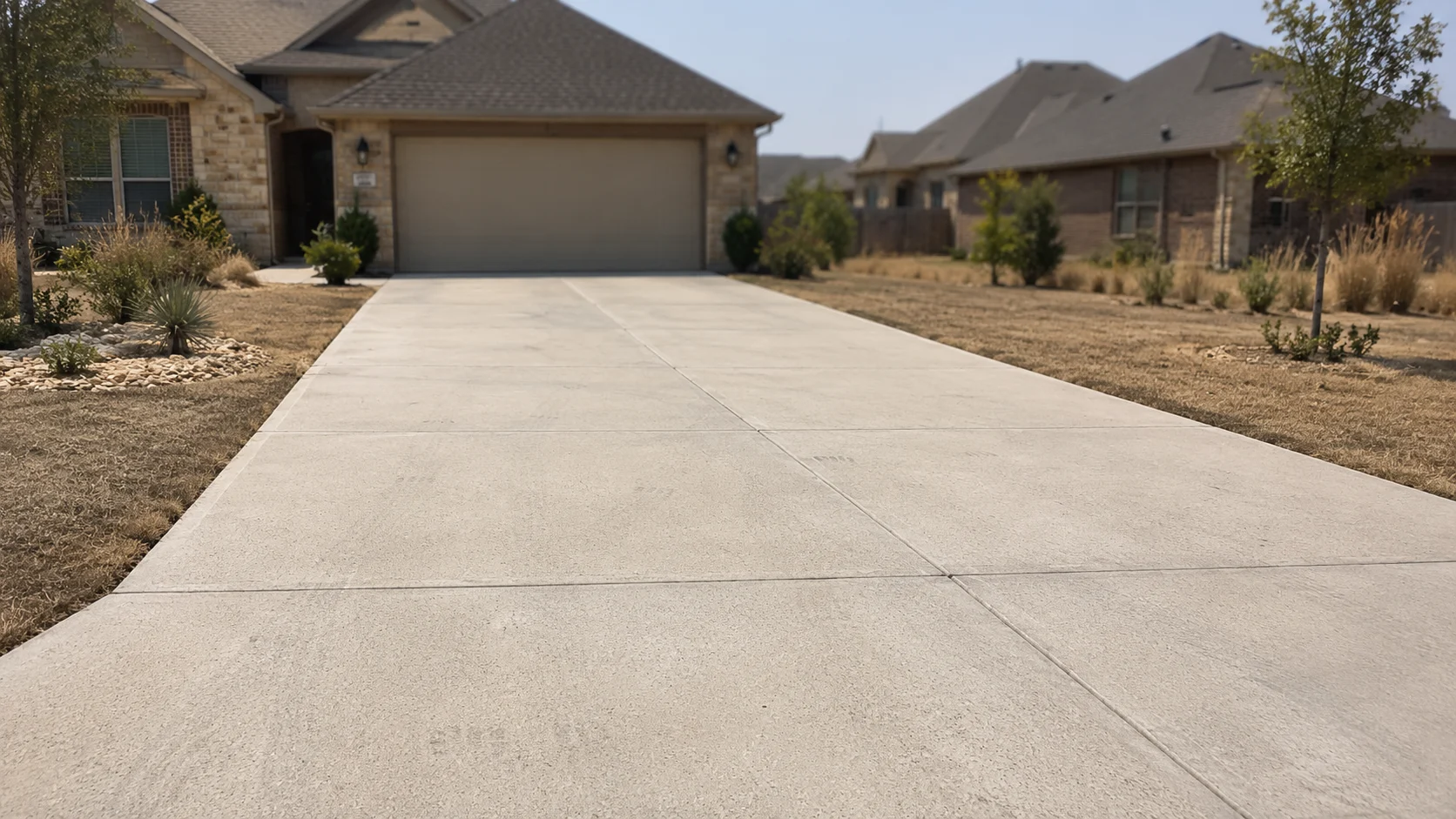
If you live in Dallas, Fort Worth, San Antonio, or one of the fast-growing suburbs in between, the short answer in 2026 is that you should not assume you can pressure wash your driveway with potable water. Several major Texas utilities are operating under formal water restrictions that specifically prohibit washing hard surfaces, and projections for the coming summer suggest those rules are unlikely to ease soon.
This guide explains what the current restrictions say, why they vary so much from city to city, and how Texas homeowners can keep concrete clean without violating their water provider's rules. For the broader picture of how restrictions affect this kind of cleaning across the country, see our national hub on pressure washing under water restrictions.
Why Texas restrictions are not relaxing
Two things keep Texas water rules tight. The first is the ongoing drought stress on the state's reservoirs and aquifers. The second is the forecast. NOAA has been projecting below-normal summer precipitation for central and west Texas, which means the conditions that triggered current restrictions may persist rather than improve through 2026. When a utility expects a dry summer, it has little reason to relax a stage it has already declared.
For homeowners, the practical result is that discretionary outdoor water use is an early target. Spraying drinking water across a slab of concrete purely to make it look fresh is, from a utility's standpoint, one of the easier uses to give up when supply is constrained.
What North Texas allows: Dallas, Fort Worth, and Frisco
The Dallas-Fort Worth metroplex is where the rules are most clearly defined for hard-surface cleaning. Both Dallas and Fort Worth have been under Moderate water restrictions that prohibit washing hard surfaces, including driveways, sidewalks, and patios, with potable water. Frisco, one of the region's fastest-growing suburbs, has similar rules in place.
The takeaway for North Texas is direct: under these Moderate restrictions, hosing or pressure washing a driveway with drinking water for appearance is generally not allowed. The rule targets exactly the activity most people mean when they say they want to "pressure wash the driveway."
Because each city administers its own ordinance, the specific stage names and enforcement details differ. Do not assume a Dallas rule applies verbatim in Fort Worth or Frisco. Check the city you actually live in.
San Antonio and the Edwards Aquifer
San Antonio's situation is distinct because the city's water supply is tied closely to the Edwards Aquifer, and the San Antonio Water System (SAWS) sets its restriction stages based on aquifer levels. SAWS has been operating at elevated restrictions, and the pressure has been historic: in June 2024, San Antonio reached its first-ever Stage 3, the most severe level in its drought rules at that time.
For 2026, the safest way to describe San Antonio's status is elevated, in the Stage 3 era, but you must confirm the current stage directly with SAWS before doing any outdoor cleaning. Aquifer levels move, and the stage can change with them. Under elevated SAWS stages, the same logic applies as in North Texas: washing hard surfaces with potable water for aesthetic reasons is the kind of discretionary use that restrictions are designed to curb.
Pflugerville and other Central Texas cities
The pressure is not limited to the biggest metros. Pflugerville, in the Austin area, has declared a Stage 3 Emergency, its most severe stage. That is a strong signal of how seriously Central Texas utilities are treating the current conditions. Smaller and mid-sized cities across the region set their own triggers and may be at very different stages than their larger neighbors, so a homeowner in one suburb cannot rely on a nearby city's rules.
The Gulf Coast and the Houston angle
Texas is large enough that one statewide answer does not fit. The Houston metro, where this site already serves patio cleaning and is expanding driveway service, faces a different dynamic than the drought-stressed center and west of the state. The Gulf Coast's defining feature is humidity, and that humidity drives persistent algae, mold, and mildew on hardscape. A north-facing or shaded driveway in the Houston area can green over quickly.
That matters because it changes the nature of the cleaning problem. Where North Texas and San Antonio homeowners are most constrained by drought stages, Houston-area homeowners are more often dealing with biological growth, the kind of buildup that creates slip hazards and gradually degrades the surface. The cleaning method, and how a utility views it, can differ accordingly. You can see how this plays out for a specific Houston-area city on our Katy, TX cleaning cost page, and review broader pricing on our cost guide.
The nuance: not all cleaning is treated the same
Restriction rules are generally aimed at wasteful, aesthetic hosing, the act of running a stream of drinking water over a slab just to brighten it. A few related situations are often treated differently, though you must confirm this with your specific utility:
- Biological-growth removal. Where algae, mold, or mildew create a genuine safety or structural concern rather than a purely cosmetic one, removal is sometimes viewed differently from routine washing. This is especially relevant on the humid Gulf Coast.
- Surface preparation. Prep work tied to sealing, coating, or repair is a functional maintenance task rather than pure aesthetics, and may be evaluated on different terms.
- Low-water methods. Soft washing uses far less water than traditional high-volume pressure washing because it relies on cleaning solutions and low pressure rather than brute-force flow. Lower consumption can make a method more defensible under restrictions.
None of these are blanket exemptions. They are distinctions that some utilities recognize and others do not, and the burden is on you to confirm before you start.
How to clean a driveway compliantly in Texas
If your city's stage prohibits washing hard surfaces with potable water, traditional pressure washing is not your path. Consider these directions instead, all subject to local confirmation:
- Dry methods first. Sweeping and using a leaf blower to clear loose dirt and debris uses no water at all.
- Soft washing. A low-pressure, solution-based approach uses dramatically less water and is well suited to the algae and mildew common on the Gulf Coast. Our guide to water-restriction-compliant soft washing explains how it works.
- Spot treatment. Targeting specific stains rather than flooding the whole slab keeps water use to a minimum.
- Professional judgment. A reputable local pro should know your city's current stage and can advise on compliant methods. You can learn more about related service on our patio cleaning page.
A note on timing and verification
Texas restriction stages are not permanent settings. They move up when conditions worsen and can ease when supply improves, and every utility adjusts independently on its own triggers.
Rules are current as of May 2026; Texas restrictions vary by utility and change often, confirm your city's stage (Dallas, Fort Worth, San Antonio/SAWS, etc.) before washing.
Treat this article as a starting point, not a substitute for your utility's official guidance. The few minutes it takes to verify your stage can save you from a violation and from wasting water the state cannot currently spare.
Regulatory details in this article reflect rules as of the dates noted and can change. Always verify current restrictions with your water management district and your HOA’s governing documents before scheduling work.
Common questions
Frequently asked
Can I pressure wash my driveway in Dallas right now?+
Generally no. Dallas has been under Moderate water restrictions that prohibit washing hard surfaces, including driveways, sidewalks, and patios, with potable water. Because stages change, confirm Dallas's current restriction status with your water provider before doing any outdoor cleaning, and consider low-water alternatives such as sweeping or soft washing in the meantime.
What stage is San Antonio (SAWS) in for 2026?+
San Antonio's stage is set by SAWS based on Edwards Aquifer levels and has been elevated, in the Stage 3 era, after the city reached its first-ever Stage 3 in June 2024. Because aquifer levels move, treat the current status as elevated but confirm the exact stage directly with SAWS before washing any hard surfaces.
Why are Texas restrictions unlikely to ease in 2026?+
NOAA has been projecting below-normal summer precipitation for central and west Texas. When utilities expect a dry summer, they have little reason to relax restriction stages they have already declared, so rules in cities like Dallas, Fort Worth, San Antonio, and Pflugerville may persist rather than loosen through the season.
Is soft washing allowed when pressure washing is not?+
Soft washing uses far less water because it relies on cleaning solutions and low pressure instead of high-volume flow, which can make it more defensible under restrictions. Some utilities also treat biological-growth removal and surface prep differently from purely aesthetic hosing. None of this is a guaranteed exemption, so confirm with your local water provider first.
Dana Whitfield · Industry & Regulatory Editor
Dana Whitfield covers the rules, regulations, and industry shifts that affect how homeowners maintain their property. With a background in local-government and utilities reporting, she tracks water-management district orders, HOA enforcement changes, and drought policy across the Sun Belt — then explains what they actually mean for a homeowner standing in their driveway. For Concrete Patio Cleaning she writes the News desk, prioritizing accuracy and plain explanation over hype, and always pointing readers to verify current rules with their own water district. Her focus is helping people stay compliant and make informed decisions as the regulatory picture changes.
Background: local-government and utilities reporting; covers Sun Belt water & HOA regulation.